


When people talk about Dennis Rodman, they talk about the championships, the hair, the rebounding records, and the larger-than-life personality that made him one of the most recognizable athletes of his generation. Rarely does the conversation begin with the woman who was part of his life long before the fame reached its peak — Annie Bakes. Yet her story is one that deserves to be told on its own terms, separate from the shadow of celebrity that has often defined how she’s been perceived.
Annie Bakes is not simply a footnote in Dennis Rodman’s biography. She is a woman who lived through an extraordinarily difficult chapter of her life, raised a daughter largely on her own, and eventually found the courage to put her experiences into words for the world to read. Understanding who she is requires looking beyond the tabloid headlines and into the real human story underneath.
Early Life and Meeting Dennis Rodman
Annie Bakes came into Dennis Rodman’s life during a period when he was just beginning to establish himself in the NBA. Rodman had been drafted by the Detroit Pistons in 1986, and while his defensive intensity was already drawing attention, he had not yet become the cultural phenomenon he would later evolve into. Their relationship began in the late 1980s, a time when Rodman was still finding his footing both professionally and personally.
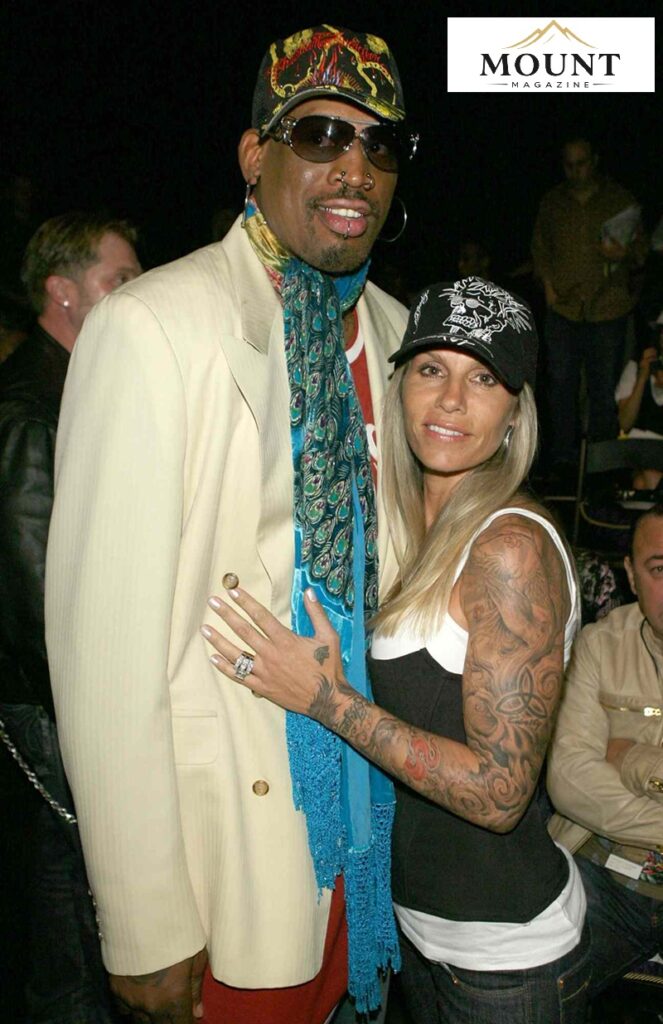
The two became romantically involved and their relationship quickly grew serious. In 1988, Annie gave birth to their daughter, Alexis Rodman — a child who would become the most enduring connection between them long after the romantic relationship had collapsed. Their on-and-off dynamic continued for years before they eventually married in 1992, a union that lasted only a matter of months before ending in divorce.
A Relationship Defined by Turbulence
The relationship between Annie Bakes and Dennis Rodman was, by most accounts — including her own — deeply troubled. While Rodman’s public image was built on eccentricity and entertainment, the private reality Annie experienced was far more difficult. She has spoken and written about facing emotional hardship, instability, and circumstances that no relationship should involve.
What makes Annie’s perspective particularly significant is the timeline. She was with Rodman before the five championship rings, before the Madonna relationship, before Carmen Electra, and before the mainstream media turned him into a pop culture icon. She knew a version of Dennis Rodman that the public rarely saw — younger, less polished, and navigating his own complicated inner world while struggling with the sudden pressures of professional basketball fame.
Here is a quick timeline to provide context:
| Year | Event |
|---|---|
| 1986 | Dennis Rodman drafted by Detroit Pistons |
| 1988 | Annie Bakes and Rodman have daughter Alexis Rodman |
| 1989 | Pistons win first NBA Championship |
| 1990 | Pistons win second NBA Championship |
| 1992 | Annie Bakes and Rodman marry — divorce within same year |
| Mid-1990s | Rodman’s fame peaks with Chicago Bulls dynasty |
| Later years | Annie Bakes authors her memoir about the relationship |
Raising Alexis Rodman
One of the most defining aspects of Annie Bakes’ life has been her role as a mother to Alexis Rodman. After her relationship with Dennis ended, Annie took on the primary responsibility of raising their daughter — a task that came with its own unique set of challenges given the public nature of the Rodman name and the complicated dynamic between the former couple.
Alexis Rodman grew up largely out of the spotlight, which speaks to the kind of environment Annie worked to create for her. Despite her father’s enormous fame — or perhaps because of it — Alexis was not paraded through tabloids or used as a prop in her father’s public narrative. That kind of protective, grounded parenting reflects something important about Annie Bakes as a person: her priority was always her child’s wellbeing over public attention.
The father-daughter relationship between Dennis and Alexis has had its own complexities over the years, with periods of distance and reconnection. Through all of it, Annie remained a constant presence in her daughter’s life.
The Memoir: Speaking Her Truth
Perhaps the most significant thing Annie Bakes has done in terms of public visibility is write her memoir, titled “Worse Than He Says He Is.” The title itself is telling — a direct response to the narratives that had already been written about Dennis Rodman’s personal life, largely from his own perspective or through the lens of admiring media coverage.
In the book, Annie documents her personal experiences during her time with Rodman. She writes about the emotional and psychological toll of the relationship, the instability she endured, and what life looked like from her side of a very one-sided story. The memoir was notable not because it was written out of bitterness — though she had every reason to be — but because it was written out of a desire for honesty.
For many women who have found themselves in relationships with powerful or famous men, the story is often told by everyone except them. The famous partner gives interviews. Biographers write chapters. Documentaries explore the celebrity’s perspective. Annie Bakes chose a different path — she wrote the book herself, in her own words, from her own memory.
The courage that takes should not be underestimated. Speaking publicly about painful personal experiences, especially when the other party is a globally recognized sports figure with a massive platform, invites scrutiny, disbelief, and often hostility. Annie did it anyway.
Life Away From the Spotlight
Unlike many people connected to celebrity athletes, Annie Bakes has not made a career out of her association with Dennis Rodman. She has not become a fixture on reality television, has not cultivated a large social media following built on name recognition, and has not repeatedly inserted herself into conversations about Rodman’s life and legacy.
This restraint — or perhaps simply a preference for privacy — makes her a somewhat rare figure in the world of celebrity-adjacent personalities. Most people in her position would have found ways to leverage the connection for ongoing public attention. Annie appears to have chosen something quieter and more personal.
That choice says something meaningful about her character. It suggests a woman who processed a difficult chapter of her life, told her story when she felt ready to tell it, and then moved forward — not backward toward the spotlight, and not into a public identity built entirely on who she used to be involved with.
Why Her Story Still Matters
In an era where conversations about power dynamics, accountability in relationships, and the experiences of women connected to famous men have taken on renewed cultural importance, Annie Bakes represents something worth paying attention to. She was in a relationship with one of the most famous athletes in the world during one of the most turbulent periods of his life. She bore and raised his child. She endured difficulties that she eventually chose to document publicly. And she did all of this without ever becoming famous in her own right.
Her story is not about Dennis Rodman’s championships or his tattoos or his eccentric public behavior. Her story is about what happens to the people on the margins of fame — the ones who experience the reality of a person that the public only ever sees through a carefully curated or sensationalized lens.
There is real value in those perspectives. They fill in the human details that highlight reels and championship retrospectives leave out. They remind us that behind every sports legend is a collection of real relationships, real consequences, and real people whose lives were shaped by proximity to greatness — not always in ways that felt great at the time.
A Quiet Legacy
Annie Bakes may never be a household name in the way that Dennis Rodman is. She may never have a documentary made about her life or receive a standing ovation at a sports hall of fame ceremony. But she raised a daughter, told her truth, and refused to let her story be entirely written by someone else — and that is a legacy worth acknowledging.
For anyone seeking to understand the fuller, more complicated picture of Dennis Rodman’s life and the people woven into it, Annie Bakes is not a peripheral character. She is one of the most honest voices in a story that has often been told with more style than accuracy.

