


Who Is Bryce Dallas Howard
Bryce Dallas Howard is an American actress and director born on March 2, 1981 in Los Angeles, California. The eldest child of Oscar-winning filmmaker Ron Howard and writer Cheryl Howard, she grew up deliberately insulated from the film industry before building a career that has moved across theatrical drama, blockbuster franchises, documentary filmmaking, and prestige television direction. She is best known internationally for playing Claire Dearing across the Jurassic World trilogy and for directing some of the most praised episodes in the Star Wars streaming universe — including episodes of The Mandalorian, The Book of Boba Fett, and Skeleton Crew.
Her middle name Dallas comes from the city in Texas where she was conceived, a naming tradition her parents applied consistently: all four Howard children — Bryce, twin sisters Jocelyn and Paige, and younger brother Reed — carry middle names that mark the city of their conception. It is a small, characteristic detail from a family that ran its household with deliberate warmth and eccentricity, as far from the machinery of Hollywood as geography would allow.
| Detail | Information |
|---|---|
| Full Name | Bryce Dallas Howard |
| Born | March 2, 1981, Los Angeles, California, USA |
| Nationality | American |
| Education | Greenwich Country Day School; Byram Hills High School; NYU Tisch School of the Arts (BFA Drama, 2003); Stella Adler Conservatory; Steppenwolf Theatre Company School |
| Occupation | Actress, director, producer |
| Years Active | 1989–present |
| Notable Films | The Village (2004), Spider-Man 3 (2007), The Help (2011), Jurassic World (2015–2022), Rocketman (2019) |
| Directing Credits | Dads (2019), The Mandalorian (Seasons 1–3), The Book of Boba Fett, Star Wars: Skeleton Crew |
| Awards | Golden Globe nomination; SAG Award (ensemble, The Help) |
| Spouse | Seth Gabel (married June 17, 2006) |
| Children | Theodore Norman Howard Gabel (b. 2007), Beatrice Jean Howard Gabel (b. 2012) |
| Father | Ron Howard, filmmaker |
Growing Up Howard — In Connecticut, Not California
When Bryce was around three years old, her parents made a decision that shaped her entirely: they left Los Angeles. The inciting moment, as she has described it, was the day a stranger handed a script to her at preschool to pass on to her father. Ron Howard, who was building Imagine Entertainment at the time, moved the family to Greenwich, Connecticut in 1985. They later also maintained a farm-style property in Armonk, New York. The children had minimal access to television, were encouraged into outdoor activities, and grew up — in her own words — knowing the Disney lot but not really being part of it.
The household was shaped by intellectual curiosity rather than industry glamour. Bryce has described herself as an intense child who walked around the Disney lot reading about euthanasia and who was drawn to existentialist philosophy and dark subject matter from early adolescence. Her godfather was Henry Winkler, who co-starred with her father on Happy Days, and she attended school alongside Natalie Portman at Stagedoor Manor, the performing arts camp in the Catskill region of New York. She attended Greenwich Country Day School and Byram Hills High School in Armonk.
Despite her lineage, she was an extra in her father’s films from age seven rather than an actor in any formal sense, and Ron Howard has spoken publicly about deliberately keeping his children out of the spotlight during their formative years, specifically to avoid the unfair comparisons that would follow. It was Bryce herself who pushed toward acting — not through Hollywood connections but through the New York stage.
NYU, the New York Theatre, and M. Night Shyamalan
After high school, Howard enrolled at NYU’s Tisch School of the Arts, where she earned a BFA in Drama in 2003. Her theatrical education extended well beyond Tisch: she studied at the Stella Adler Conservatory, the Experimental Wing, and the International Theatre Wing in Amsterdam, and was later an alumna of the Steppenwolf Theatre Company’s School at Steppenwolf in Chicago and The Actors Center in New York. During her training she also participated in a concept recording for the Broadway-bound musical A Tale of Two Cities. It was a rigorous, varied preparation that gave her a stage technique well before she had a film career to speak of.
It was theatre that brought her to the attention of M. Night Shyamalan. While playing Rosalind in a 2003 production of Shakespeare’s As You Like It, she was seen by Shyamalan, who cast her without an audition as the young blind woman in his 2004 thriller The Village. The film was a significant commercial success and established her immediately as a serious screen presence. She worked with Shyamalan again in Lady in the Water (2006), playing a water nymph in the director’s supernatural drama, and between those two projects she also replaced Nicole Kidman as Grace in Lars von Trier’s Manderlay (2005), her first nude scene on screen and an early indication of her willingness to take challenging material without hesitation.
The Golden Globe Nomination and the Franchise Years
Her performance as Rosalind in Kenneth Branagh’s film adaptation of As You Like It (2006) earned her a Golden Globe nomination for Best Actress in a Musical or Comedy — the first major awards recognition of her career. The film had limited theatrical distribution, playing primarily in Europe before a cable release in the United States, but the nomination placed her in a different category of consideration. Later in 2007 she appeared as Gwen Stacy in Sam Raimi’s Spider-Man 3 — her first role with a seven-figure salary — having dyed her naturally red hair blonde for a role in which Kirsten Dunst’s naturally blonde Mary Jane is a redhead. The two women’s hair reversals became a minor piece of film trivia.

The years between Spider-Man 3 and Jurassic World included an eclectic run of films: Kate Connor in Terminator Salvation (2009), Victoria in The Twilight Saga: Eclipse (2010) — replacing Rachelle Lefevre, a casting controversy that attracted press attention at the time — and a role in Clint Eastwood’s Hereafter (2010). None of these were career-defining, but they kept her working across genres and demonstrated a versatility that large studios eventually noticed.
Key Film and Directing Credits
| Project | Year | Role / Function | Notable Detail |
|---|---|---|---|
| The Village | 2004 | Actress — Ivy Walker | Cast without audition by Shyamalan |
| As You Like It | 2006 | Actress — Rosalind | Golden Globe nomination |
| Spider-Man 3 | 2007 | Actress — Gwen Stacy | First $1 million payday |
| The Help | 2011 | Actress — Hilly Holbrook | SAG Award (ensemble) |
| Jurassic World | 2015 | Actress — Claire Dearing | $1.7 billion global gross |
| Pete’s Dragon | 2016 | Actress — Meacham | — |
| Rocketman | 2019 | Actress — Sheila Dwight | Elton John’s mother |
| Dads | 2019 | Director | TIFF premiere |
| The Mandalorian | 2019–2023 | Director (3 episodes) | Seasons 1, 2, and 3 |
| The Book of Boba Fett | 2022 | Director (1 episode) | Among highest-rated SW episodes |
| Skeleton Crew | 2024 | Director (1 episode) | — |
| Deep Cover | 2025 | Actress — Kat | 91% Rotten Tomatoes; Prime Video |
The Help and Hilly Holbrook
Bryce Dallas Howard’s most critically discussed dramatic performance remains her portrayal of Hilly Holbrook in The Help (2011), Tate Taylor’s adaptation of Kathryn Stockett’s novel about Black domestic workers in 1960s Mississippi. Playing the film’s primary antagonist — a socially dominant white woman whose rigid enforcement of racial segregation drives the story’s central conflict — Howard brought a precision to the character’s cruelty that made the performance more unsettling than a simpler villain portrayal would have been. Critics responded strongly, and the ensemble cast won the Screen Actors Guild Award for Outstanding Performance by a Cast in a Motion Picture. Emma Stone, Jessica Chastain, and Viola Davis were among her co-stars — a cast whose members have been regularly confused with one another in the years since, with Howard and Jessica Chastain in particular the subject of mistaken identity stories including one involving Ron Howard himself briefly confusing Chastain for his daughter in an Apple store.
Jurassic World and the Pay Gap That Went Public
The Jurassic World trilogy (2015, 2018, 2022) gave Howard her largest commercial platform. As Claire Dearing, the Jurassic World operations manager who begins the franchise as its antagonist and evolves across three films into its conscience, she anchored a series that grossed a combined total of well over four billion dollars globally. Her performance in high heels through the jungle of the first film became one of the franchise’s most discussed images — she has said the ankle exercises required to complete those sequences were among the hardest physical work she has done on a film set.
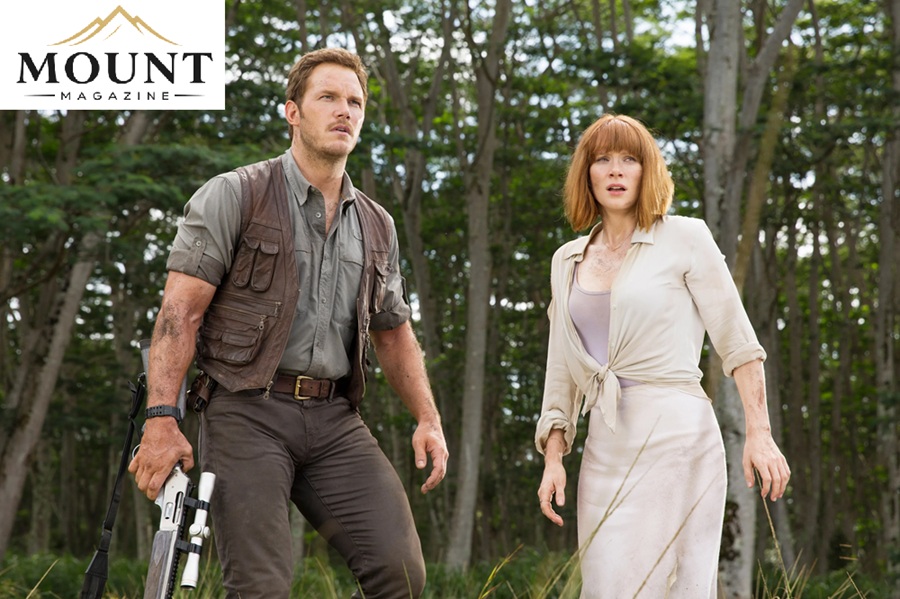
The trilogy also produced one of the more unusual salary discussions to emerge from a major franchise. Reports suggested she was paid approximately two million dollars less than co-star Chris Pratt’s ten million dollar fee. Howard stated publicly that the actual gap was larger than reported, and she also noted that the framing of the comparison was incomplete — she received higher compensation for non-theatrical Jurassic World work including video games and theme park rides. The episode brought the persistent disparity in studio pay between male and female franchise leads into direct public conversation rather than allowing it to remain an industry background assumption.
Directing: From Dads to the Star Wars Universe
Howard’s interest in directing developed gradually and then accelerated sharply. Her feature documentary debut, Dads (2019), premiered at the Toronto International Film Festival and is an Apple TV+ release exploring fatherhood through interviews with celebrity and non-celebrity fathers. It was a subject with obvious personal resonance — her own father features in it — and it functioned as a full-scale production credit that demonstrated her capabilities as a filmmaker rather than simply as a performer.

Her work on The Mandalorian began the same year, and its scope expanded with each season. She directed “Sanctuary” in Season 1 — the episode that introduced Cara Dune and which drew widespread comparisons to Kurosawa’s Seven Samurai — then “The Heiress” in Season 2, which marked the first live-action appearance of Bo-Katan Kryze, the animated character voiced by Katee Sackhoff across multiple Star Wars animation series. Her Season 3 episode “Guns for Hire,” set on a planet governed by Jack Black and Lizzo, took a deliberately lighter tonal register from her earlier episodes. One episode from The Book of Boba Fett — “Return of the Mandalorian,” a Din Djarin-centric detour that briefly abandoned the series’ titular character — is regularly cited by critics and fans as among the finest individual episodes of any Disney+ Star Wars production. She directed a further episode of Star Wars: Skeleton Crew in 2024.
She spent time on the set of Solo: A Star Wars Story observing both her father, who directed the film after Phil Lord and Christopher Miller departed, and George Lucas himself, who visited during production. Lucas’s emphasis on collaboration and genre fluidity has influenced how she discusses her own approach to directing: the idea that Star Wars succeeds by borrowing freely from multiple cinematic traditions — westerns, samurai films, horror, mythology — rather than defining itself as a single type of story.
Deep Cover and the Post-Franchise Period
Following the conclusion of the Jurassic World trilogy with Dominion (2022) and a supporting role in Matthew Vaughn’s spy comedy Argylle (2024), Howard starred in Deep Cover (2025), an action comedy set in London produced by Colin Trevorrow and released on Amazon Prime Video on June 12, 2025. The film — which premiered as the Centrepiece Headliner at SXSW London and also screened at Tribeca — cast her as Kat, an improv comedy teacher who is recruited by an undercover cop and finds herself and two students infiltrating the London criminal underworld. The ensemble included Orlando Bloom, Nick Mohammed, Sean Bean, Ian McShane, and Paddy Considine. Deep Cover received strong critical notices, opening at 91% on Rotten Tomatoes.
The casting draws on something real in Howard’s sensibility — a facility for comedy that her dramatic roles have not always foregrounded. She has said that working on improv material during filming created a collaborative energy that felt genuinely different from the more structured approach of the franchise work that has occupied much of her recent decade.
Personal Life
Howard met Seth Gabel, an actor, during her time at NYU. They dated for five years before marrying on June 17, 2006. A week after their wedding, she discovered she was pregnant — earlier than the couple had planned. Their son, Theodore Norman Howard Gabel, was born on February 16, 2007. Howard has spoken openly about experiencing postpartum depression eighteen months after Theodore’s birth, crediting a physician and therapist with her recovery. Their daughter, Beatrice Jean Howard Gabel, was born on January 12, 2012. The family lives in upstate New York. Josh Gad, the actor and filmmaker, is godfather to both children.
Howard became a vegan after Joaquin Phoenix, her co-star on The Village, showed her the documentary Earthlings — a film about animal cruelty for which Phoenix had narrated. She later shifted to vegetarianism during pregnancy to increase her amino acid intake and has maintained that position since. She is also a committed environmentalist, is a brand ambassador for the Halo Foundation, and has expressed consistent concern about ecological issues across interviews.
An Industry Legacy Built From Scratch
The most instructive fact about Bryce Dallas Howard’s career is that she had every shortcut available and chose not to take them. Ron Howard did not cast her in his films; he kept her off sets and out of the industry conversation until she was ready on her own terms. What she built instead — through New York theatre, through NYU, through five years of franchise supporting roles, through a documentary debut, and now through a directing catalogue inside the most commercially powerful franchise in streaming television — is a body of work that stands independently of her surname. The story of an actress who is also the daughter of a legendary filmmaker is usually a story about access; in her case, it is more precisely a story about what she chose to do after declining to use it.

