


Katherine Johnson was an extraordinary American mathematician whose precise calculations of orbital mechanics became critical to the success of the United States’ first and subsequent crewed spaceflights during the Space Race. Born Creola Katherine Coleman on August 26, 1918, in White Sulphur Springs, West Virginia, Johnson demonstrated exceptional mathematical abilities from early childhood, counting everything from steps to silverware with an insatiable curiosity about numbers. During her remarkable 33-year career at NASA and its predecessor NACA, she earned a legendary reputation for mastering complex manual calculations, helped pioneer the use of computers to perform tasks previously requiring human computation, and broke through racial and gender barriers as one of the first African-American women to work as a NASA scientist—all while maintaining humility and grace that made her achievements even more extraordinary.
Understanding Katherine Johnson is essential for appreciating how brilliance, perseverance, and courage can overcome systemic discrimination to change history. Her trajectory calculations for Project Mercury, including astronaut John Glenn’s historic 1962 orbital flight, and her work on Apollo missions that landed humans on the Moon proved indispensable to America’s space program. Recognized globally after the 2016 film “Hidden Figures” brought her story to millions, Johnson received the Presidential Medal of Freedom in 2015 and the Congressional Gold Medal in 2019, cementing her legacy as both a mathematical genius and a civil rights pioneer whose contributions literally reached the stars.
Personal Information
| Category | Details |
| Birth Name | Creola Katherine Coleman |
| Birth Date | August 26, 1918 |
| Birthplace | White Sulphur Springs, West Virginia, USA |
| Death Date | February 24, 2020 (age 101) |
| Death Place | Newport News, Virginia, USA |
| Parents | Joylette Roberta Lowe (mother, teacher)
Joshua McKinley Coleman (father, lumberman/farmer) |
| Education | West Virginia State College (B.S. Mathematics & French, 1937) |
| Marriages | James Francis Goble (1939-1956, his death)
James A. Johnson (1959-2019, his death) |
| Children | 3 daughters |
| Career Span | 1953-1986 (33 years at NASA/NACA) |
| Notable Work | Mercury missions, Apollo missions, Space Shuttle |
Early Life and Mathematical Prodigy
Katherine Johnson was born as the youngest of four children to parents who prioritized education despite living in segregated West Virginia. Her mother was a teacher, and her father worked as a lumberman, farmer, handyman, and at the Greenbrier Hotel. From her father, Katherine learned a life-changing lesson: “You are no better than anyone else, and nobody else is better than you.” This principle became the foundation of her resilience and confidence throughout life.
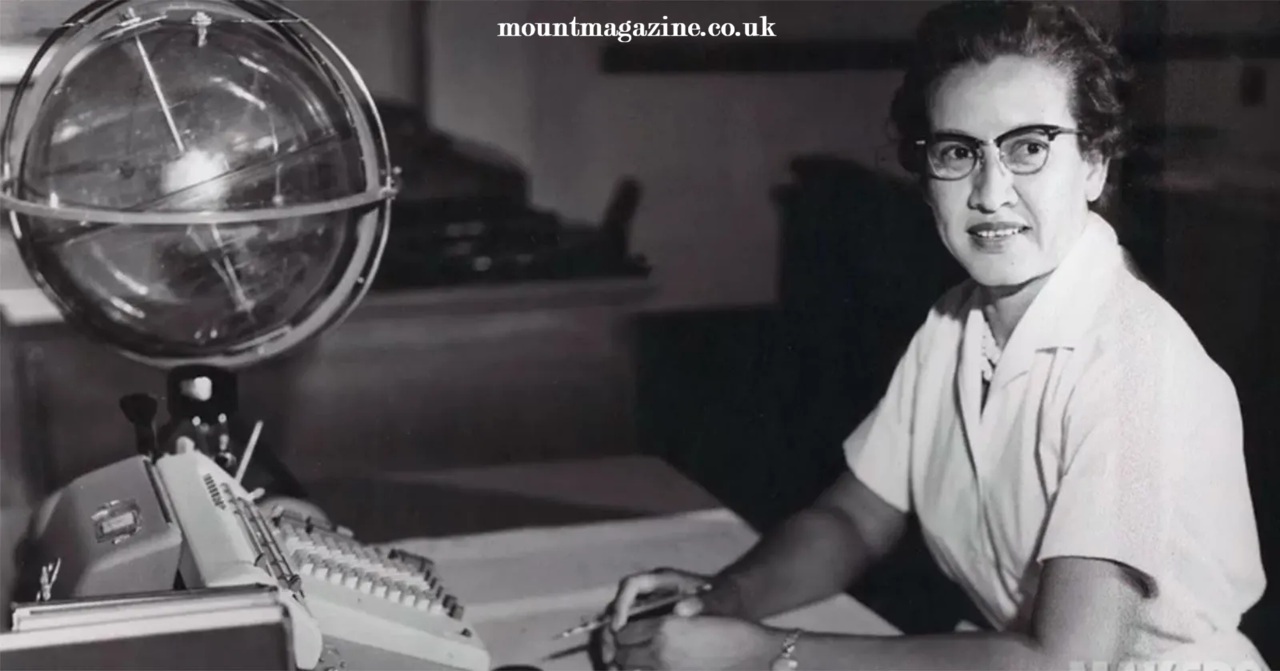
Johnson’s fascination with numbers manifested immediately. “I counted everything. I counted the steps to the road, the steps up to church, the number of dishes and silverware I washed … anything that could be counted, I did,” she recalled decades later. This innate mathematical curiosity wasn’t mere childhood play—it signaled exceptional cognitive abilities that would reshape space exploration.
Her intellectual gifts became apparent early, allowing her to skip multiple grades. By age 10, Katherine was already attending high school—an extraordinary achievement in any era but particularly remarkable for an African-American girl in 1920s West Virginia. Her parents, determined their children would receive college degrees, seized every opportunity to place them in the best schools available despite the constraints of segregation.
Education and Formative Influences
Katherine’s academic trajectory led her to West Virginia State College, a historically black institution where she encountered Professor William Schieffelin Claytor, a brilliant mathematician who became her mentor and changed her life. Claytor, only the third African American to earn a Ph.D. in mathematics, recognized Katherine’s exceptional talent and nurtured it deliberately.
| Educational Milestone | Year | Age | Achievement |
| Entered high school | 1928 | 10 | Advanced placement due to abilities |
| Entered college | 1933 | 15 | West Virginia State College |
| Created custom class | 1936 | 18 | Claytor created Analytic Geometry of Space just for her |
| Graduated summa cum laude | 1937 | 18 | B.S. in Mathematics and French |
| Graduate program | 1939 | 21 | First Black woman at WVU graduate school |
Professor Claytor told Katherine she would make an excellent research mathematician and went beyond typical mentorship to create a special class in analytic geometry of space designed specifically for her needs. “Professor Claytor made sure I was prepared to be a research mathematician,” Johnson recalled years later, crediting him with providing the rigorous foundation that would prove essential at NASA.
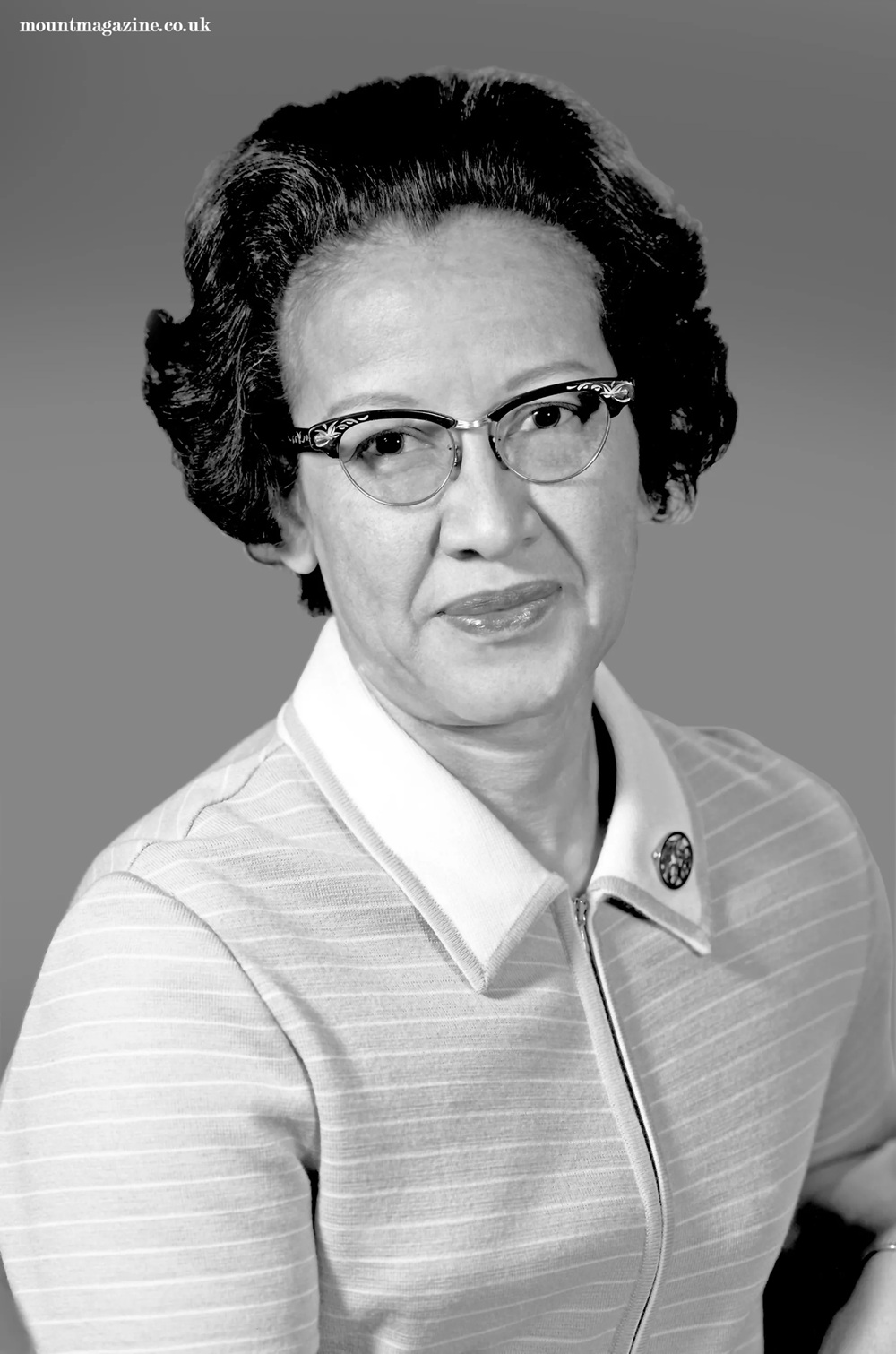
In 1939, Katherine achieved another historic milestone by becoming one of the first three African-American students selected to integrate West Virginia University’s graduate program. However, after one year of coursework, she left to marry James Francis Goble and start a family, a decision common for women of that era despite her extraordinary academic promise.
Family Life and Balancing Career with Motherhood
Katherine married James Francis Goble in 1939. He was a chemistry teacher known for his intelligence, patience, and strong moral values. Together they had three daughters, and Katherine initially focused on family life and teaching. Her eldest daughter, Joylette Goble, would later become an important steward of her mother’s legacy, participating in public events and helping preserve Katherine’s inspiring story for future generations through memoir collaboration and public speaking.
During these years, Katherine taught at Black public schools in Virginia and West Virginia, sharing her mathematical gifts with students while raising her daughters. However, the intellectual hunger Professor Claytor had cultivated never diminished. When her husband fell ill in 1952, she began teaching again to support the family.
Tragedy struck in December 1956 when James Goble died of an inoperable brain tumor, leaving Katherine a widow with three daughters to raise alone. This devastating loss occurred just as her professional career at NASA’s predecessor was beginning to flourish, forcing her to balance grief with the demands of groundbreaking scientific work and single motherhood.
In 1959, Katherine found happiness again when she married James A. “Jim” Johnson, a Korean War veteran and U.S. Army officer. This 60-year marriage brought stability and support, with Jim encouraging Katherine’s career and helping create a strong family foundation. He remained her devoted partner until his death in March 2019 at age 93, less than a year before Katherine herself passed away.
Joining NACA: The Beginning of a Historic Career
The pivotal moment in Katherine’s professional life came in 1952 when a relative mentioned at a family gathering that the National Advisory Committee for Aeronautics (NACA) was hiring African-American women to work as “computers” in their Guidance and Navigation Department. The term “computer” then referred to people—primarily women—who performed complex mathematical calculations that engineers needed.
Katherine immediately applied but learned they had already filled their quota for the year. Undeterred, she applied again the following year and received two simultaneous offers: one to teach and one to work for NACA. Remembering Professor Claytor’s encouragement to become a research mathematician, she chose NACA, a decision that would change American history.
In June 1953, Katherine moved her family to Newport News, Virginia, and began working at the Langley Memorial Aeronautical Laboratory. She started in the segregated West Area Computing section under the supervision of fellow West Virginian Dorothy Vaughan, working in what was described as a pool of women who were “computers who wore skirts.”
NACA/NASA Career Timeline
| Year | Position/Achievement | Significance |
| 1953 | Joined West Area Computing | Started as “human computer” |
| 1953 | Assigned to Flight Research Division | Permanent position within two weeks |
| 1957 | Sputnik launch | Changed aerospace history and Johnson’s trajectory |
| 1958 | NACA becomes NASA | Segregation officially banned |
| 1960 | Co-authored first report with name | First woman in division with name on publication |
| 1961 | Calculated Alan Shepard’s trajectory | First American in space |
| 1962 | Verified John Glenn’s orbital calculations | Glenn requested her personally |
| 1969 | Apollo 11 calculations | Helped land humans on moon |
| 1970s | Space Shuttle work | Continued contributing to programs |
| 1986 | Retired | After 33 years of service |
Breaking Barriers at NASA
Just two weeks into her tenure at Langley, Dorothy Vaughan assigned Katherine to a project in the Maneuver Loads Branch of the Flight Research Division, and what was supposed to be a temporary position quickly became permanent. She spent the next four years analyzing data from flight tests and investigating aircraft incidents, including a plane crash caused by wake turbulence.
During this period, Katherine encountered the pervasive discrimination that defined mid-20th century America. The Langley facility was desegregated in theory but not in practice. Johnson recalled, “We needed to be assertive as women in those days—assertive and aggressive—and the degree to which we had to be that way depended on where you were. I had to be.”
One critical barrier Katherine shattered involved authorship credit. In the early days of NASA, women were not allowed to put their names on reports—no woman in her division had ever been named as an author. When Katherine worked with engineer Ted Skopinski on a report, he wanted to leave for Houston before finishing it. Their supervisor, Henry Pearson, who “was not a fan of women,” kept pushing Skopinski to complete the report. Finally, Ted told him, “Katherine should finish the report, she’s done most of the work anyway.”
This left Pearson with no choice. Katherine finished the report, and her name went on it as co-author—the first time a woman in her division received authorship credit. The 1960 report, “Determination of Azimuth Angle at Burnout for Placing a Satellite Over a Selected Earth Position,” became a landmark not just scientifically but socially, proving women’s intellectual contributions deserved recognition.
Katherine also challenged segregated facilities by asserting herself in editorial meetings where no women had gone before and using bathrooms designated for white women only. Her quiet but firm insistence on professional respect helped dismantle discriminatory practices through personal example rather than confrontation.
The Space Race and Project Mercury
The October 1957 launch of the Soviet satellite Sputnik fundamentally changed aerospace history—and Katherine Johnson’s life. America’s determination not to fall behind the Soviet Union in space exploration created urgent demand for the precise mathematical calculations that were Katherine’s specialty.
Her passion for geometry proved perfectly suited for calculating spacecraft trajectories. For NASA’s 1961 Mercury mission carrying astronaut Alan Shepard—the first American in space—Katherine performed the critical calculations. She knew that spaceflight trajectories followed parabolic curves, a type of symmetrical mathematical shape. Her approach was elegantly simple: “You tell me when you want it and where you want it to land, and I’ll do it backwards and tell you when to take off.”
Historic Space Missions
| Mission | Year | Katherine’s Contribution | Historical Significance |
| Alan Shepard’s flight | 1961 | Calculated trajectory | First American in space |
| John Glenn’s orbit | 1962 | Verified computer calculations | First American to orbit Earth |
| Apollo 11 | 1969 | Lunar Module/Command Module rendezvous | First moon landing |
| Apollo 13 | 1970 | Emergency return calculations | Safe return after oxygen tank explosion |
| Space Shuttle | 1980s | Various calculations | Reusable spacecraft program |
John Glenn’s Historic Flight
Perhaps Katherine’s most famous contribution came in 1962 with astronaut John Glenn’s orbital mission aboard Friendship 7. The complexity of orbital flight required construction of a worldwide communications network linking tracking stations to IBM computers in Washington, Cape Canaveral, and Bermuda. The computers had been programmed with orbital equations controlling the capsule’s trajectory from liftoff to splashdown.
However, astronauts were understandably wary of trusting their lives to electronic calculating machines prone to technical failures. As part of the preflight checklist, Glenn made a request that became legendary: he asked engineers to “get the girl”—meaning Katherine Johnson—to manually verify the computer’s calculations using her desktop mechanical calculating machine.
“If she says they’re good,” Glenn stated, “then I’m ready to go.” This extraordinary vote of confidence from America’s hero-astronaut demonstrated the trust and respect Katherine had earned. Her verification confirmed the computer’s accuracy, Glenn’s flight succeeded, and the mission marked a turning point in the Space Race between the United States and Soviet Union.
Apollo Program and Moon Missions
When asked to name her greatest contribution to space exploration, Katherine would discuss the calculations that helped synchronize Project Apollo’s Lunar Module with the lunar-orbiting Command and Service Module—the critical maneuver that allowed astronauts to descend to the moon’s surface and return safely to the spacecraft that would bring them home.
Her work on Apollo missions required even more sophisticated mathematics than Mercury flights. The complexity of moon missions involved multiple spacecraft, gravitational influences from both Earth and Moon, precise timing for launches and rendezvous, and emergency backup calculations for potential failures.
The successful Apollo 11 moon landing in July 1969, when Neil Armstrong and Buzz Aldrin became the first humans to walk on the lunar surface, depended on the mathematical foundation Katherine and her colleagues had built. Every subsequent Apollo mission benefited from her contributions to trajectory science and orbital mechanics.
Career Achievements and Recognition
Throughout her 33-year career, Katherine authored or co-authored 26 research reports covering topics from spacecraft trajectories to satellite positioning. She worked on the Space Shuttle program and the Earth Resources Technology Satellite (later renamed Landsat). Her expertise spanned the entire American space program from its earliest days through the shuttle era.
Despite these extraordinary achievements, Katherine maintained characteristic humility. “I loved going to work every single day,” she simply stated about her career. When asked about her legacy, she downplayed her role: “I was just doing my job, and I don’t know what all this is about.”
Major Awards and Honors
| Award/Honor | Year | Presented By |
| Mathematician of the Year | 1997 | National Technical Association |
| Honorary Doctor of Laws | Various | SUNY |
| Honorary Doctor of Science | Various | Capitol College, Old Dominion University |
| Presidential Medal of Freedom | 2015 | President Barack Obama |
| Silver Snoopy Award | 2016 | NASA astronaut Leland Melvin |
| NASA Group Achievement Award | 2016 | NASA |
| Katherine G. Johnson Computational Research Facility | 2016 | NASA building dedication |
| Congressional Gold Medal | 2019 | U.S. Congress |
| National Women’s Hall of Fame | 2021 | Posthumous induction |
Hidden Figures: Global Recognition
For decades, Katherine Johnson’s contributions remained largely unknown outside NASA and the space community. That changed dramatically in 2016 when author Margot Lee Shetterly published “Hidden Figures: The American Dream and the Untold Story of the Black Women Mathematicians Who Helped Win the Space Race.”
The book, and the subsequent film adaptation starring Taraji P. Henson as Katherine Johnson, brought her story to a global audience. The movie received critical acclaim, earned multiple Academy Award nominations, and became a cultural phenomenon that sparked renewed interest in STEM education, particularly for women and minorities.
Suddenly, at age 97, Katherine became a household name and inspiration to millions. She attended the film’s premiere and various promotional events, graciously accepting belated recognition while maintaining her characteristic modesty. The visibility also highlighted the contributions of her colleagues Dorothy Vaughan and Mary Jackson, ensuring their legacies would be preserved alongside hers.
NASA Administrator Charles Bolden eloquently summarized Katherine’s impact when she received the Presidential Medal of Freedom: “She’s one of the greatest minds ever to grace our agency or our country, and because of the trail she blazed, young Americans like my granddaughters can pursue their own dreams without a feeling of inferiority. Katherine’s legacy is a big part of the reason that my fellow astronauts and I were able to get to space; it’s also a big part of the reason that today there is space for women and African-Americans in the leadership of our nation, including the White House.”
Personal Philosophy and Values
Throughout her life, Katherine lived by principles instilled during childhood. Her father’s teaching—”You are no better than anyone else, and nobody else is better than you”—gave her confidence to challenge discrimination while maintaining humility about achievements.
She emphasized preparation, telling her daughters and anyone who asked that “everything is about preparation.” This philosophy applied equally to mathematics and life, encouraging thorough groundwork before attempting difficult tasks.
Katherine also advised finding work you love: “Find out what it is you’d like to do. If you work hard at it, it won’t be a job.” She genuinely meant her statement that she never worked a day in her life at NASA because she loved the intellectual challenges and was constantly engaged with new problems requiring innovative solutions.
Her faith remained important throughout life. She was an active member of Alpha Kappa Alpha Sorority, Inc., for more than 80 years, serving as chapter president twice and founding the Lambda Omega chapter chorale, which she directed. Her sorority sisters celebrated her 99th birthday with a “Party of the Nines” where representatives from all Divine Nine organizations presented her with pink roses and gifts.
Later Years and Death
Katherine Johnson retired from NASA in 1986 after 33 years of service, having witnessed American space exploration evolve from its earliest uncertain days to routine shuttle flights. She lived quietly in Newport News, Virginia, enjoying time with family including grandchildren and eventually great-grandchildren.
The renewed attention following “Hidden Figures” meant her final years included public appearances, awards ceremonies, and countless interviews. She handled sudden fame with the same grace she had applied to historic calculations, remaining humble while inspiring new generations to pursue STEM careers.
Katherine Johnson died on February 24, 2020, at age 101 in a retirement community in Newport News. NASA Administrator Jim Bridenstine honored her as “an American hero” whose “pioneering legacy will never be forgotten.” Her death prompted tributes from around the world, with leaders, scientists, and ordinary citizens expressing gratitude for her contributions to space exploration and civil rights.
Conclusion
Katherine Johnson transformed American space exploration through mathematical genius, overcame systemic racism and sexism through quiet determination, and inspired millions through humble excellence that proved brilliance knows no color or gender. From counting steps as a curious child in West Virginia to calculating trajectories that sent humans to the Moon, her 101-year journey exemplified how talent combined with opportunity and perseverance can literally reach the stars. Her legacy extends far beyond the 26 research reports she authored or the missions she enabled—it lives in every young person, particularly women and minorities, who now see STEM careers as achievable dreams rather than impossible fantasies.
For anyone seeking inspiration about what one person can accomplish against overwhelming odds, Katherine Johnson provides the ultimate example. She didn’t just calculate where rockets should go; she showed humanity where determination, intelligence, and grace can take us when we refuse to accept arbitrary limitations. Her life proved that being told “you can’t” means nothing when you know you can, and that the most powerful response to discrimination isn’t anger but excellence so undeniable it transforms entire systems. At 101 years old when she died, Katherine Johnson left behind not just historic calculations but a roadmap for how to live with purpose, integrity, and impact that echoes across generations.

