


| Quick Facts | Details |
|---|---|
| Full Name | Michael Anthony Peña |
| Date of Birth | January 13, 1976 |
| Birthplace | Chicago, Illinois, USA |
| Raised | North Lawndale, Chicago |
| Age (2026) | 50 years old |
| Height | 5 ft 9 in (1.78 m) |
| Nationality | American (Mexican heritage) |
| Father | Eleuterio Peña — factory worker; originally from Mexico |
| Mother | Nicolasa Peña — social worker; originally from Mexico |
| High School | Marist High School (Catholic; left due to financial difficulties) → Hubbard High School (graduated) |
| Career start | 1994 — acting since age 18 |
| First film | To Sir, with Love II (1996) — Peter Bogdanovich; open casting; beat hundreds of applicants |
| Tough years | 1994–2004 — ten years of small roles, stereotyped as gangster/criminal parts |
| Breakthrough | Crash (2004) — Daniel the locksmith; Academy Award Best Picture winner |
| Also 2004 | Million Dollar Baby (Best Picture winner) |
| Key roles | World Trade Center (2006); Babel (2006); End of Watch (2012); American Hustle (2013); César Chávez (2014); Fury (2014); Ant-Man’s Luis (2015, 2018); Narcos: Mexico (2018); A Million Miles Away (2023) |
| Marvel role | Luis — Ant-Man (2015); Ant-Man and the Wasp (2018) |
| Netflix | DEA agent Kiki Camarena — Narcos: Mexico Season 1 (2018) |
| Latest | A Working Man (2025) — with Jason Statham; directed by David Ayer; co-written Sylvester Stallone |
| Music | Nico Vega — co-founded 2005; named after mother Nicolasa; left 2007; returned December 2023 |
| Religion | Church of Scientology — member since 2000 |
| Wife | Brie Shaffer — married 2006; screenwriter and actress |
| Son | Roman Peña (b. 2008) |
| Residence | Los Feliz, Los Angeles |
| Net Worth (2026 est.) | $12 million |
In a 2018 interview with The New York Times, Michael Peña was asked about the state of Latino representation in Hollywood and gave an answer whose specific historical detail made it one of the more striking statements about race and opportunity in the entertainment industry that any actor had offered in that era of the conversation:
“Fifteen years ago, when I started… Lead part: Caucasian, Caucasian, Caucasian. Supporting part: Caucasian, Caucasian, Caucasian. The best I could do was 15th place.”
The fifteen years he was describing began in 1994, when he was eighteen years old, living in North Lawndale — one of Chicago’s most impoverished and historically overlooked neighbourhoods — and beginning to do what he had decided to do with his life: act. The ten years that followed the beginning were, by every account including his own, genuinely difficult: small roles, stereotyped as gangster or criminal types, coaching friends who arrived in Hollywood after him and made it before he did, spending a decade at “15th place” in casting calls whose lead and supporting roles were written for someone who looked nothing like him.
Then came 2004. Crash. Paul Haggis. Daniel the locksmith. And in the same year — extraordinary in the annals of supporting actor careers — Million Dollar Baby, Clint Eastwood’s film that also won the Academy Award for Best Picture. Michael Peña appeared in both films that won the Academy Award for Best Picture in consecutive years. He was twenty-eight years old. He had been in Hollywood for ten years. He had been at 15th place for most of them.
The story of Michael Peña is the story of what happens when you stay at something long enough and well enough for the industry to eventually understand what it has been overlooking.
North Lawndale, Chicago: The Formation
Michael Anthony Peña was born on January 13, 1976, in Chicago, Illinois — the third-largest city in the United States, whose specific geography of neighbourhoods represents one of the most documented racial and economic stratifications in American urban life. He grew up in North Lawndale — the West Side neighbourhood whose history is a condensed version of the mid-twentieth century American story of white flight, industrial decline, and the specific consequences that those forces produce in the communities they leave behind.
North Lawndale had once been a thriving working-class Jewish community — the neighbourhood where Sears, Roebuck and Company had its national headquarters, where the elevated train brought workers to the factories that employed them, and where the social fabric of a dense urban community sustained itself across generations. The demographic transformation of the 1950s and 1960s — accelerated by the specific policies of racial steering, redlining, and urban renewal that Chicago’s city government deployed across the postwar decades — left North Lawndale by the 1970s as one of the most economically distressed communities in the city: high unemployment, inadequate housing stock, the specific compound difficulties of a neighbourhood whose physical infrastructure had been disinvested for decades.
His father, Eleuterio Peña, worked in a factory — on the production line that manufactured buttons, the kind of industrial labour whose repetition and physical demands reflect the specific economic position of first-generation Mexican immigrants in the Chicago of the 1970s and 1980s. His mother, Nicolasa Peña — to whom he would later pay a specific and permanent tribute — was a social worker, whose professional orientation toward the wellbeing of vulnerable people in exactly the community they lived in reflects the specific moral character of someone who understood what her neighbours needed and chose to work toward it.
Both parents had emigrated from Mexico — building their American life in the specific circumstances that North Lawndale in the late 1970s provided: modest income, strong family values, and the community of other Mexican immigrant families whose mutual support created the social infrastructure that the neighbourhood’s official disinvestment had failed to provide.
He attended Marist High School — the Catholic school on the South Side whose tuition requirements eventually exceeded what the family’s finances could sustain — before transferring to Hubbard High School, the Chicago public school from which he graduated. The transition from Catholic to public school, from a tuition-dependent environment to one whose access required only geographic proximity, is the specific biographical marker of a family navigating the gap between their values and their resources with the practical flexibility that limited options produce.
He began acting at eighteen — a decision whose specific genesis is not documented with the precise biographical detail of someone whose origin story was catalogued before he was famous, but whose outcome — a career that began in 1994 and has sustained itself for more than thirty years — suggests a conviction that was clear from the beginning even if its path was not.
Ten Years at Fifteenth Place
The decade between 1994 and 2004 is the biographical period that defines Michael Peña’s career more completely than any of the successful years that followed it — because the quality that sustained him across ten years of consistent professional disappointment is the same quality that his best performances demonstrate on screen: the specific combination of patience, intelligence, and the particular kind of optimism that is not naivety but the conscious decision to continue believing in something despite the evidence against it.
He made his television debut in the early years of the decade — appearing in episodes of Homicide: Life on the Street, the HBO drama series that was, by critical consensus, one of the most sophisticated police procedurals American television had yet produced. The credit was real and it was small.
His first feature film role came in Peter Bogdanovich’s To Sir, with Love II (1996) — the made-for-television sequel to the 1967 Sidney Poitier classroom drama, whose casting had involved an open call that hundreds of young men attended. Peña was among those hundreds. He got the role. He beat them all. The credit was real and it was small.
The pattern of the following years was the pattern he described in the NYT interview: roles available for someone who looked like him were, in the Hollywood of the 1990s, primarily gangster and criminal types — the specific stereotyping that the entertainment industry applied to young Latino men whose careers were beginning in the years before the conversation about representation became sufficiently loud to produce meaningful industry change. He played those parts. He was good at them. He was, by every account, significantly better than the parts themselves required. He coached friends who came to Hollywood after him and watched them make it before he did — the specific emotional experience of someone who knows they are capable of more than the system has decided to offer them, and who chooses, repeatedly and deliberately, to stay anyway.
“My first ten years in Hollywood were really tough,” he told IMDB. “I’d be coaching friends who came to me for acting advice, and then they’d make it before I did.”
The toughness was real. The patience was a choice. The choice was the foundation of everything that followed.
2004: Two Best Picture Winners
In 2004, Paul Haggis cast Michael Peña as Daniel — a locksmith — in Crash: the ensemble drama about racial tension and intersection in Los Angeles, whose twenty or so central characters interact across a single day and whose specific argument about the specific ways that racism operates in the daily texture of American life was, by turns, praised for its ambition and criticised for its simplification.
What was not criticised, by anyone whose assessment was recorded, was Michael Peña’s performance.
Daniel the locksmith is a Mexican-American man whose quiet dignity, professional competence, and devastating vulnerability in the film’s most emotionally affecting scene — the moment that has since become one of the most discussed in the film — demonstrated the specific range that ten years of professional development in smaller roles had produced. He was not playing a gangster. He was playing a man. The distinction, which seems obvious in retrospect, was not obvious to most casting directors who had seen him for ten years before Paul Haggis made it legible to the industry.
Crash won the Academy Award for Best Picture at the 78th Academy Awards in March 2006 (for the 2005 ceremony, covering 2004 films). In the same year, Clint Eastwood’s Million Dollar Baby — in which Peña also appeared — had won the Academy Award for Best Picture at the 77th ceremony. The extraordinary statistical circumstance of a supporting actor appearing in consecutive Best Picture winners — a coincidence of casting and quality that the entertainment industry’s machinery does not usually produce for people at 15th place — was the public crystallisation of what had been developing across a decade.
The Middle Career: Building the Range
The years between Crash and the Marvel Cinematic Universe were the years in which Michael Peña built the specific range that his best work demonstrates — moving across genre, tone, and scale with the deliberate intelligence of someone who understood that the breakthrough of Crash had opened doors whose full potential required sustained development to realise.
World Trade Center (2006) — Oliver Stone’s account of the rescue of two Port Authority officers from the rubble of the collapsed towers — placed him in a dramatically demanding historical film whose subject matter required the specific combination of physical authenticity and emotional truthfulness that his work consistently delivers. Babel (2006) — Alejandro González Iñárritu’s multi-country ensemble drama starring Brad Pitt — placed him in the specific company of filmmakers and actors whose work operates at the level of international prestige cinema.

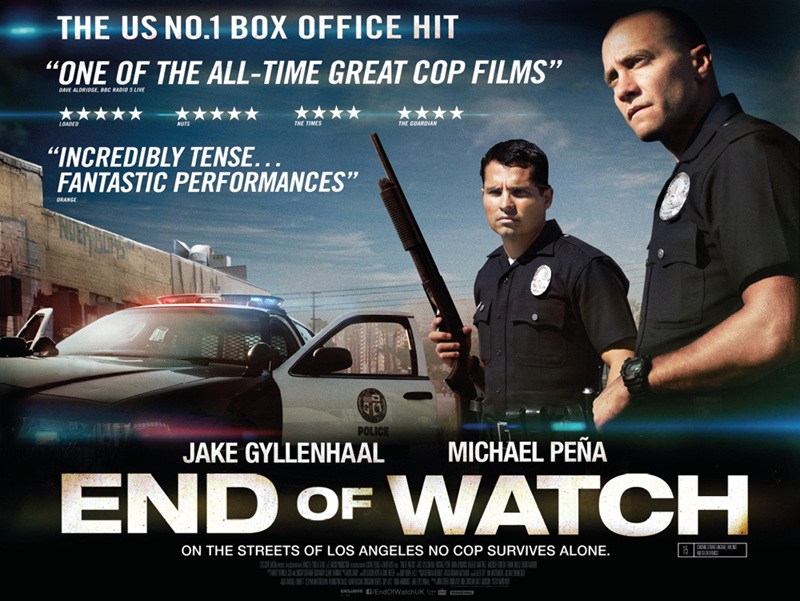
End of Watch (2012) — David Ayer’s handheld-camera LAPD drama in which he starred opposite Jake Gyllenhaal as two patrol officers in South Los Angeles — produced his most sustained and most technically demanding dramatic performance to that point, and earned him an Independent Spirit Award nomination for Best Supporting Male whose recognition reflected the specific quality of a performance that the studio awards machinery had, in its typical fashion, overlooked.
American Hustle (2013) — David O. Russell’s 1970s con-artist ensemble, which won the SAG Award for Outstanding Performance by a Cast in 2014 — placed him alongside Christian Bale, Amy Adams, Bradley Cooper, Jennifer Lawrence, and Jeremy Renner in a production whose every credited performance demonstrated the cast density that ensemble Award Circuit films require.
César Chávez (2014) gave him the title role in a biographical film about the legendary Mexican-American labour leader — a role whose specific historical and cultural weight, in the context of Michael Peña’s own biography as the son of Mexican immigrant parents, carried a personal resonance that the performance reflected.
Fury (2014) — David Ayer’s WWII tank crew drama starring Brad Pitt — continued the David Ayer collaboration that would produce multiple significant credits across his career, and whose working relationship with the director gave each successive Ayer film a specific quality of trust that the best director-actor partnerships sustain.

Luis: The Marvel Performance That Changed the Conversation
When Ant-Man was released in July 2015, the character that the film’s audience responded to most immediately and most enthusiastically was not the title hero but his friend and former cell mate Luis — played by Michael Peña with a specific comedic technique whose brilliance is not immediately obvious but whose mechanism, when examined, reveals exactly the quality that made his career at 15th place simultaneously understandable and inexplicable.
Luis’s monologues — rapid-fire, circuitous, digressive storytelling sequences in which he narrates secondhand information through a chain of social connections (“so she tells her man, who tells his boy, who tells his girl…”) while the film cuts to the action he is describing with other actors lip-syncing his voice — are among the most technically distinctive comedic set pieces in the MCU’s history. They require the specific combination of verbal dexterity, physical commitment, and the precise calibration of rhythm and timing that makes comedy land rather than merely exist.
The monologues work because of what Michael Peña brings to them: the absolute conviction that this is how Luis talks, combined with the acute awareness of where each digression needs to pause and accelerate to maintain the audience’s engagement, combined with the physical expressiveness of a performer who uses his entire body in service of the character’s specific energy. He made Luis, who is written as comic relief, into one of the most human characters in a franchise whose scale sometimes works against humanity.
He reprised the role in Ant-Man and the Wasp (2018) — the sequel that brought Luis back for another round of narrative monologues and confirmed that the specific quality of the character was not an accident of the first film’s energy but the outcome of Michael Peña’s consistent professional investment in making Luis as real as the science fiction that surrounds him.
Narcos: Mexico: Kiki Camarena
In 2018, Netflix’s Narcos: Mexico cast Michael Peña as DEA agent Enrique “Kiki” Camarena — the real-life American law enforcement officer whose undercover work infiltrating the Guadalajara Cartel led to the most significant drug trafficking investigation of the 1980s, and whose 1985 kidnapping, torture, and murder became one of the most consequential events in the history of the US-Mexico drug war.
The role was the most sustained and most dramatically serious of Peña’s television career to that point — a lead performance in a prestige Netflix drama whose production values and creative ambition placed it within the specific tier of international streaming drama that attracts the most significant industry attention. His portrayal of Camarena — the specific combination of professional competence, moral conviction, and the particular vulnerability of a man who understood the danger he was in and continued anyway — was, by critical consensus, the season’s central achievement.
The series’ first season ran ten episodes, all of which centred on the developing investigation and its increasingly dangerous consequences. Peña appeared in subsequent seasons in diminished capacity as the show’s narrative moved beyond Camarena’s story — but the first season’s performance established him in the dramatic television landscape at a level that the film career’s episodic presence had not quite produced.
Nico Vega: The Band Named After His Mother
The musical dimension of Michael Peña’s biography is one of the less-discussed aspects of a career whose public record tends toward the acting credits, but whose specific origin story is among the more touching available: he co-founded the rock band Nico Vega — naming it after his mother Nicolasa — in 2005, while his acting career was in the period between Crash‘s breakthrough and the consolidation of the roles that would follow.
He left the band in 2007 when the demands of his acting career made the dual commitment impractical, but returned in December 2023 — the specific reunion of someone who had not left the music behind but had placed it in abeyance while other professional priorities required his full attention. The band is known for the single “Beast”, which charted at No. 26 on the Billboard Hot Rock Songs chart.
The naming of the band after his mother is the biographical detail that most directly documents what she meant to him — the specific tribute of someone who had watched a social worker from Mexico build a life of service in one of Chicago’s toughest neighbourhoods and had found in that life the clearest available model for what genuine professional commitment looked like.
Church of Scientology, Brie Shaffer, and Life in Los Feliz
Michael Peña joined the Church of Scientology in 2000 — during the decade of tough years, before the Crash breakthrough, in the specific period when the personal and professional pressures of a career that was not yet working would have been at their most acute. He has spoken about Scientology in multiple interviews, describing it as a positive and sustaining element of his life without elaborating on its specific content — the standard framing of a public figure who practices a religion that attracts significant public scrutiny.
He married Brie Shaffer in 2006 — the screenwriter and actress whose professional identity is her own rather than defined by her husband’s career. Their son Roman Peña was born in 2008. The family lives in Los Feliz — the East Los Angeles neighbourhood whose specific character, shaped by its Hollywood Hills adjacency, its creative community, and the specific domestic scale of its bungalows and craftsman houses, reflects the kind of grounded Los Angeles life that the entertainment industry makes possible but does not automatically produce.
A Working Man and What Comes Next
In 2025, Michael Peña appeared in A Working Man — the action thriller directed by David Ayer (their fourth collaboration following End of Watch, Fury, and SWAT) and co-written by Sylvester Stallone, starring Jason Statham as the lead. The film represents the continuation of the David Ayer creative partnership that has been one of the most consistent professional relationships of the middle and later career, and whose specific dynamic — Ayer’s interest in working-class characters facing institutional and criminal systems, Peña’s capacity for both dramatic weight and physical presence — has produced some of the most distinctive genre films of the period.
Net Worth: The Fifty-Year Accounting
| Income Source | Estimated Contribution |
|---|---|
| 1994–2004 — ten years of small roles | Modest cumulative income |
| Crash (2004) + Million Dollar Baby (2004) | Career-defining but independently modest fees |
| World Trade Center, Babel (2006) | Mid-level studio supporting fees |
| End of Watch (2012) — David Ayer | Indie drama fee |
| American Hustle (2013) | Ensemble studio fee |
| César Chávez (2014), Fury (2014) | Biographical lead + studio ensemble |
| Ant-Man (2015), Ant-Man and the Wasp (2018) | MCU fees — significantly higher |
| The Martian (2015) | Ridley Scott ensemble fee |
| Narcos: Mexico Season 1 lead (2018) | Netflix drama lead fee |
| Jack Ryan Season 4 (2023) | Streaming ensemble fee |
| A Million Miles Away (2023) | Amazon Prime lead fee |
| Unstoppable (2024) | Recent project fee |
| A Working Man (2025) | Action film supporting fee |
| Nico Vega music | Modest; supplemental |
| Estimated Total Net Worth (2026) | $12 million |
Conclusion
Michael Peña was born in North Lawndale, Chicago, on January 13, 1976, the son of a button factory worker from Mexico and a social worker from Mexico. He went to a Catholic school until the family couldn’t afford it, graduated from a public school, started acting at eighteen, spent ten years at 15th place, appeared in consecutive Best Picture winners, played a Mexican-American locksmith whose dignity on screen in 2004 made a decade of gangster casting look like a preparation rather than a career, played a man named Luis whose storytelling monologues made the Marvel Cinematic Universe funnier, played a DEA agent whose 1985 murder changed American drug policy, named his rock band after his mother Nicolasa, and is fifty years old with a net worth of $12 million and a David Ayer movie with Jason Statham on his recent credits.
He said fifteen years ago that the best he could do was 15th place. That was before Crash. That was before Luis. That was before Kiki Camarena. He was not describing where he was going. He was describing where he had been.

