


Nigel Sharrocks is one of those rare figures in the British media and advertising industries whose influence is entirely disproportionate to his public profile — a man who has spent four decades at the centre of some of the most consequential decisions in British media without ever seeking the kind of visibility that his wife, BBC broadcaster Fiona Bruce, inhabits so naturally and so brilliantly. He has helped launch one of the world’s largest media buying agencies. He has served as Managing Director of Warner Bros. Pictures UK, overseeing the British distribution of more than 150 films including Harry Potter and The Matrix. He has led the global operations of Aegis Media through a period of international expansion that culminated in one of the largest transactions in advertising history. And he currently chairs the bodies that determine how British cinema advertising is sold and how British television audiences are measured. That this extraordinary accumulation of institutional influence is still, for many people, primarily understood through the lens of his marriage is a measure not of his insignificance but of his exceptional commitment to doing consequential work without requiring the world to notice.
Biography / Wiki Table
| Detail | Information |
|---|---|
| Full Name | Nigel Sharrocks |
| Date of Birth | August 1956 |
| Age (2025) | 69 years old |
| Place of Birth / Raised | United Kingdom (England) |
| Nationality | British |
| Ethnicity | White British |
| Father | Not publicly confirmed |
| Mother | Not publicly confirmed |
| Siblings | Not publicly confirmed |
| Wife | Fiona Bruce (BBC presenter; married July 1994, Islington, London) |
| How They Met | At BMP (Boase Massimi Pollitt) advertising agency, 1989 — he was a director; she was beginning her career |
| Son | Sam Sharrocks (born January 1998; filmmaker and director) |
| Daughter | Mia Rose Sharrocks (born November 2001) |
| Education | Higher education in business and marketing; University of Bath (reported) |
| Career Start | Boase Massimi Pollitt (BMP), London — late 1970s / early 1980s |
| Early Senior Role | Managing Director — Grey Advertising (global advertising network) |
| Major Achievement 1 | Helped launch and chair MediaCom — now one of WPP’s largest global media buying agencies |
| Major Achievement 2 | Managing Director — Warner Bros. Pictures UK (1999–2004); oversaw 150+ film releases |
| Major Achievement 3 | Global CEO — Aegis Media Global Brands / Carat (2010–2013); Aegis acquired by Dentsu for £3.2 billion (2013) |
| Current Role 1 | Non-Executive Chairman — Digital Cinema Media (DCM) |
| Current Role 2 | Non-Executive Chairman — BARB (Broadcasters’ Audience Research Board) |
| Current Role 3 | Non-Executive Chairman — Silver Bullet Data Services Group Plc (from March 2023) |
| Current Role 4 | Chairman — Local Planet International Ltd |
| Political Note | No verified Conservative Party donations; Full Fact and The Guardian have corrected false claims on this matter |
| Net Worth (est.) | £5–7 million (unconfirmed; derived from career and corporate holdings) |
| Public Profile | Deliberately and consistently low; rarely appears in media |
Early Life: England, Business Education, and a Career Built at the Right Moment
Nigel Sharrocks was born in August 1956, somewhere in England — the precise location has never been publicly confirmed, consistent with the general approach to privacy that has characterised his entire adult life. What is understood is that he received a higher education grounded in business and marketing — the University of Bath has been cited in some sources, though this has not been officially confirmed — and that he entered the British advertising industry in the late 1970s or early 1980s at exactly the moment when that industry was undergoing one of the most significant structural transformations of its modern history.
The late 1970s in British advertising were a period of genuine creative ferment and commercial evolution. Television had become the dominant advertising medium, and the relationship between the creative agencies that produced advertising campaigns and the media buying functions that placed them was beginning to separate into distinct disciplines. The emergence of dedicated media buying agencies — organisations that would eventually manage billions of pounds of advertising spend and wield extraordinary power over the commercial media ecosystem — was just beginning to take shape. Entering the industry at this moment, with a background in business and marketing, placed Nigel Sharrocks at precisely the intellectual and commercial frontier where the most consequential work of the next four decades would be done.
He is described by those who have worked with him as calm, driven, and strategic — someone who thinks patiently toward goals and achieves them through rigour and consistency rather than through the kind of forceful personality that tends to generate coverage but not always results. The contrast with the very visible, very warmly received public persona of his wife is striking, and it is not accidental. He has chosen, throughout his career, to make his influence felt through the quality of his decisions rather than through the volume of his presence.
Boase Massimi Pollitt: Where It Began — and Where He Met Fiona
Nigel Sharrocks began his professional career at Boase Massimi Pollitt — universally known in the British advertising world as BMP — one of the most celebrated and creatively influential advertising agencies in the history of British media. BMP was founded in 1968 by Martin Boase, Gabe Massimi, and Stanley Pollitt, and became renowned for introducing consumer research as a fundamental discipline in the creation of advertising campaigns — a philosophy that Pollitt in particular championed through the development of account planning as a formal agency function.
BMP produced some of the most iconic British advertising campaigns of the 1970s and 1980s, and its reputation for strategic rigour combined with genuine creative ambition made it the kind of agency that attracted the most thoughtful and analytically sophisticated people the industry had to offer. Working there gave Sharrocks both the intellectual foundations of media strategy — understanding audiences, measuring behaviour, translating insight into campaign decisions — and the professional network that would sustain his career across the following decades.
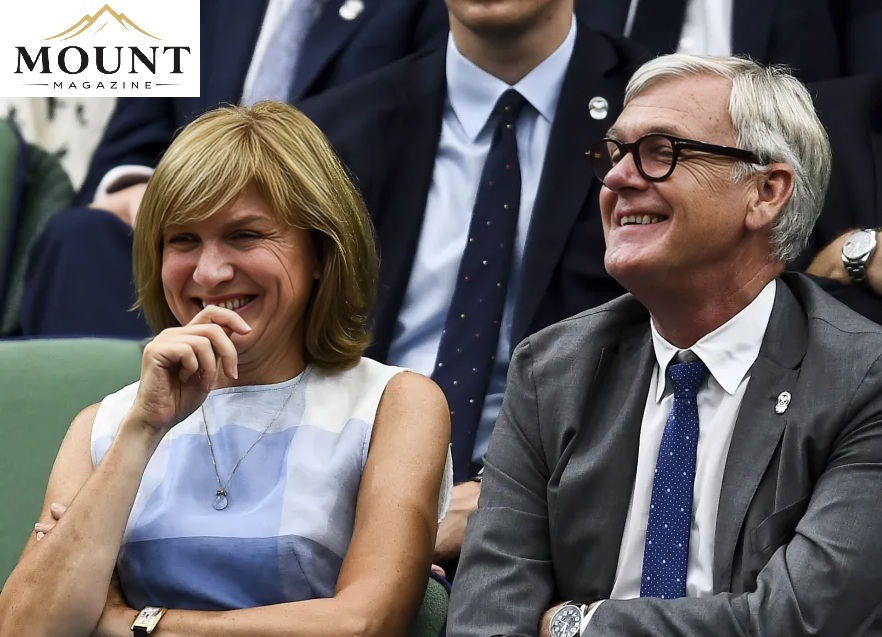
It was at BMP that he met Fiona Bruce in 1989 — he was a director at the agency; she was beginning her career there. They began a relationship that led, in July 1994, to their marriage in Islington, London. The marriage has endured for more than thirty years, producing two children — Sam, born in January 1998, and Mia Rose, born in November 2001 — and has been described by those close to the couple as grounded, warm, and genuinely equal in its mutual support of two very different but equally serious professional lives.
Grey Advertising: The Managing Director Years
From BMP, Nigel Sharrocks moved to Grey Advertising — a major international advertising network whose London operations were, during the late 1980s and early 1990s, among the most significant in the British market. At Grey, he rose to the position of Managing Director — his first experience of leading a major advertising organisation at the most senior level, and the role in which the combination of business discipline and strategic media instinct that would define his career fully came into its own.
Grey Advertising was, during his tenure, pioneering new models of integrated communication — bringing together the creative, planning, and media functions of advertising into a more coherent strategic whole. As Managing Director, Sharrocks was responsible for the overall commercial and operational direction of the London operation — managing teams, overseeing client relationships, developing media strategy, and positioning the agency competitively in a market that was evolving rapidly as satellite television, independent radio, and the early digital media landscape began to emerge.
His time at Grey was also the period during which one of his most enduring professional legacies was established. It was during this era that he was instrumental in helping to launch MediaCom — the media buying agency that would grow, under the WPP umbrella, into one of the largest and most globally significant agencies in the world.
MediaCom: Helping Build One of the World’s Largest Media Agencies
The role that Nigel Sharrocks played in the founding and early development of MediaCom is one of the most significant, and least publicly appreciated, chapters of his career. MediaCom began as a media buying operation connected to Grey Advertising, and Sharrocks’s contribution to its early structure, strategy, and growth placed him at the founding moment of what would become a global media powerhouse.
MediaCom today is one of WPP’s flagship media agencies — managing media planning and buying across dozens of markets worldwide, working with some of the world’s largest advertisers, and representing the full realisation of the vision that the advertising industry’s most forward-thinking figures had in the late 1980s for what a dedicated, data-driven, strategically sophisticated media buying operation could become. The agency employs thousands of people globally and manages media budgets that run into the billions.
His chairmanship of MediaCom in its growth years gave him the experience of building an organisation from relatively modest origins into an institution of genuine global scale — an experience that would prove directly applicable to everything he took on in the subsequent decades.
Warner Bros. Pictures UK: Managing Director (1999–2004)
In 1999, Nigel Sharrocks was appointed Managing Director of Warner Bros. Pictures UK — the British operation of one of the world’s largest and most storied entertainment studios. The role placed him at the head of the organisation responsible for the theatrical distribution, marketing, and commercial strategy of Warner Bros. film releases in the United Kingdom, at a moment when the studio’s slate was producing some of the most commercially significant films in the history of British cinema-going.

Between 1999 and 2004 — his five years in the role — Warner Bros. UK oversaw the British release of more than 150 major studio films. Among them were the first instalments of the Harry Potter franchise — Harry Potter and the Philosopher’s Stone (2001) and Harry Potter and the Chamber of Secrets (2002) — which broke British box office records and generated the kind of cultural excitement around cinema-going that the industry had not experienced in a generation. The Matrix and its sequels were also part of the slate during this period, alongside numerous other major studio productions whose British theatrical success was managed under his leadership.
The Managing Director of a major studio’s national operation is responsible for the full commercial mechanism through which a film reaches its audience — the negotiations with cinema chains about screen allocations and marketing commitments, the development of the local marketing strategy for each release, the management of the local team, and the relationship with the studio’s international headquarters. It is work that combines the creative instincts of the entertainment industry with the hard commercial discipline of business management, and Sharrocks brought to it exactly the combination of strategic clarity and operational capability that his advertising career had developed.
| Year | Notable Warner Bros. UK Releases During His Tenure |
|---|---|
| 1999 | Eyes Wide Shut (Stanley Kubrick); The Matrix (Wachowski siblings) |
| 2000 | The Perfect Storm; Space Cowboys |
| 2001 | Harry Potter and the Philosopher’s Stone (UK record-breaking) |
| 2002 | Harry Potter and the Chamber of Secrets; The Matrix Reloaded |
| 2003 | The Matrix Revolutions; Mystic River (Clint Eastwood) |
| 2004 | Closer; Ocean’s Twelve |
Aegis Media / Carat: Global CEO and the Dentsu Acquisition
After his Warner Bros. years, Nigel Sharrocks returned to the advertising and media side of the industry, eventually rising to the role of Global CEO of Aegis Media Global Brands — the international operations of Aegis Media, the London-based media services group whose flagship brand was Carat, one of the world’s most recognised media buying networks.
He was appointed to the Global CEO role in 2010, taking overall responsibility for the strategic direction and operational performance of Aegis’s international brand portfolio at a critical moment in the company’s history. Aegis had, by this point, established itself as one of the most significant independent media services groups in the world — operating in dozens of markets, managing billions in media spend, and representing a genuine alternative to the WPP and Publicis-dominated structures that defined the top end of the global advertising market.
His tenure as Global CEO coincided with the culmination of Aegis’s corporate trajectory. In 2012, the Japanese advertising and public relations group Dentsu — one of the world’s largest communications companies — announced a £3.2 billion acquisition of Aegis Group, in what was at the time one of the largest transactions in the history of the global advertising industry. The deal was completed in 2013, and Sharrocks stepped down from the Global CEO role following the completion of the acquisition — having successfully guided one of the most significant corporate transitions in modern British advertising through its concluding chapter.
The Dentsu-Aegis transaction created what became Dentsu Aegis Network — subsequently rebranded as Dentsu International — one of the top five advertising and media services groups in the world. That the organisation whose global brand operations Sharrocks led became, through acquisition, a foundational component of one of the world’s largest communications companies is a measure of the scale and significance of what he was responsible for during his Aegis years.
BARB: Chairing the Body That Measures Britain’s Viewing
Following his departure from Aegis, Nigel Sharrocks moved into a new phase of his career — one focused on the governance and strategic direction of the industry bodies whose work underpins the entire British media ecosystem.
His appointment as Non-Executive Chairman of BARB — the Broadcasters’ Audience Research Board — placed him at the head of the organisation that provides the official audience measurement data for television and video in the United Kingdom. BARB is jointly owned by the BBC, ITV, Channel 4, Channel 5, Sky, and the Institute of Practitioners in Advertising, and its data is used by broadcasters, advertisers, and agencies to determine the true reach and effectiveness of content and advertising across the full range of British television output.
The chairmanship of BARB is not a ceremonial position. It requires a genuine understanding of the technical, commercial, and strategic dimensions of audience measurement — how viewing panels are constructed and maintained, how data is collected and processed, how the methodology keeps pace with the extraordinary changes in viewing behaviour that the streaming era has produced — as well as the ability to balance the sometimes competing interests of the broadcasters and advertising industry bodies that jointly own and fund the organisation.
Under Sharrocks’s chairmanship, BARB has undergone a significant digital transformation — extending its measurement methodology to account for the growing proportion of television viewing that takes place through streaming platforms, catch-up services, and devices beyond the traditional television set. This transformation — from the relatively straightforward business of measuring linear broadcast audiences to the much more complex challenge of measuring video consumption across the full range of platforms and devices — is one of the most technically demanding challenges in the history of broadcast audience measurement, and navigating it has required precisely the combination of strategic vision and operational rigour that his career has consistently delivered.
Digital Cinema Media and the Cinema Advertising Ecosystem
Nigel Sharrocks serves as Non-Executive Chairman of Digital Cinema Media — the company that handles cinema advertising sales for the majority of UK cinema screens, representing the major exhibition chains including Odeon, Cineworld, and Vue.
DCM occupies a unique position in the British advertising ecosystem. Cinema advertising has properties that no other medium can replicate — a captive, engaged audience, a screen experience of exceptional sensory immersion, and the specific quality of attention that people bring to the cinema that distinguishes it from television viewing, online video consumption, or out-of-home advertising. As the primary sales house for the UK cinema advertising market, DCM is both a commercial organisation and an industry institution — and chairing it requires the specific combination of entertainment industry experience and media commercial understanding that Sharrocks’s career across Warner Bros. and Aegis has uniquely equipped him to bring.
Silver Bullet Data Services and Local Planet International
The most recent additions to Nigel Sharrocks’s portfolio of board responsibilities reflect the continuing evolution of his professional engagement with the data-driven future of media.
Silver Bullet Data Services Group Plc — whose Non-Executive Chairmanship he assumed in March 2023 — is a company focused on privacy-compliant data marketing solutions, working in the space where data strategy, audience intelligence, and the increasingly complex regulatory environment around personal data intersect. His chairmanship reflects a genuine engagement with the data-driven future of the advertising industry rather than simply a legacy engagement with its past.
Local Planet International — whose chairmanship he also holds — is a network of independent media agencies operating across multiple international markets, providing media planning and buying services outside the structures of the major holding company networks. His chairmanship connects his deep expertise in the global media buying world with an organisational model that represents the independent alternative to that world.
Fiona Bruce: A Partnership of Genuine Equals
It would be possible — and it is a temptation that much of the coverage of Nigel Sharrocks falls into — to understand his personal life entirely through the frame of his wife’s career. Fiona Bruce is one of the most recognised and most respected broadcasters in the United Kingdom: the presenter of BBC News at Ten and BBC News at Six across two separate tenures spanning more than twenty years; the host of Antiques Roadshow since 2008; the chair of Question Time since 2019; a journalist whose work across Panorama, Crimewatch, and the BBC’s major news coverage has established her as one of the defining figures of British public broadcasting.
The truth of the partnership, by every available account, is that it is genuinely equal — not a relationship in which one person’s career is subordinated to the other’s, but one in which two independently serious and independently successful people have built a shared life that makes room for both. Fiona Bruce has spoken in interviews about Nigel’s support as one of the reasons she has been able to sustain the career she has — a support that is practical, emotional, and entirely grounded in genuine respect for what she does. He, for his part, has maintained the kind of consistent privacy that allows a marriage to exist as a private thing rather than a public performance.
Their son Sam Sharrocks — born January 1998 — has followed a creative path, working as a filmmaker and director. Their daughter Mia Rose Sharrocks — born November 2001 — has maintained a similarly private profile. The family is based in London.
The Political Clarification
One dimension of Nigel Sharrocks’s public profile that deserves specific and direct attention is the matter of his alleged political affiliations — a subject that has generated misleading coverage and required formal correction.
Claims that Sharrocks made donations to the Conservative Party, or that his professional roles created conflicts of interest in relation to government contracts, were investigated by Full Fact and The Guardian, both of which issued corrections to reporting that had made these claims. The verified position is that he left Aegis before any relevant government contracts were entered into, and that no verified Conservative Party donations have been established. He has not publicly identified himself with any political party or cause, consistent with the general approach to privacy that has characterised his entire public life.
What Four Decades of Quiet Influence Looks Like
The career of Nigel Sharrocks is, taken as a whole, an argument for a particular kind of professional excellence — the kind that does not require public recognition to be genuine, that does not diminish when the cameras are pointed elsewhere, and that produces consequences which outlast the attention they generate.
He helped build MediaCom into a global media buying institution. He presided over the British theatrical release of Harry Potter. He led the international operations of one of the world’s major advertising groups through its acquisition by one of the world’s largest communications companies. He chairs the body that tells Britain how many people watched last night’s television. He chairs the body that sells advertising in Britain’s cinemas. He does all of this without a Wikipedia page, without a social media presence, without any of the apparatus through which public figures in the media industry typically construct and maintain their visibility.
That is not a small thing. That is, in the specific and demanding language of the industry he has shaped, an extraordinary record — and it belongs entirely to him.
Career Timeline
| Year | Milestone |
|---|---|
| August 1956 | Born in England, United Kingdom |
| ~Late 1970s / Early 1980s | Enters British advertising industry; joins Boase Massimi Pollitt (BMP), London |
| ~Mid 1980s | Moves to Grey Advertising; rises to Managing Director |
| ~Late 1980s / Early 1990s | Instrumental in launching MediaCom; serves as Chairman during growth years |
| 1989 | Meets Fiona Bruce at BMP advertising agency |
| July 1994 | Marries Fiona Bruce in Islington, London |
| 1999 | Appointed Managing Director of Warner Bros. Pictures UK |
| 2001 | Oversees UK release of Harry Potter and the Philosopher’s Stone — record-breaking box office |
| 2002 | Oversees UK release of Harry Potter and the Chamber of Secrets |
| 2004 | Leaves Warner Bros. Pictures UK after five years and 150+ film releases |
| January 1998 | Son Sam Sharrocks born |
| November 2001 | Daughter Mia Rose Sharrocks born |
| ~2005–2009 | Senior roles across media and advertising industry |
| 2010 | Appointed Global CEO of Aegis Media Global Brands / Carat |
| 2012 | Dentsu announces £3.2 billion acquisition of Aegis Group |
| 2013 | Dentsu-Aegis acquisition completed; Sharrocks steps down from Global CEO role |
| 2013 | Appointed Non-Executive Chairman of BARB (Broadcasters’ Audience Research Board) |
| ~2014–2015 | Appointed Non-Executive Chairman of Digital Cinema Media (DCM) |
| ~2015–2020 | Chairs Local Planet International Ltd |
| March 2023 | Appointed Non-Executive Chairman of Silver Bullet Data Services Group Plc |
| 2025 | Continues active chairmanship of DCM, BARB, Silver Bullet, Local Planet; age 69 |

