


When John Light first appeared as Hercule Flambeau in the opening episode of Father Brown in January 2013, he walked onto the screen in the way that the character demands — with the particular combination of elegance, menace, and barely suppressed warmth that G.K. Chesterton had written into the jewel thief nemesis of his famous Catholic detective priest nearly a century earlier. Mark Williams, who plays the titular Father Brown, has described the Flambeau episodes with the specific enthusiasm of an actor who knows when a scene partner is giving him something to work with: “I love the Flambeau episodes — it feels like we are in a 1950s thriller and John Light plays him to the hilt.”
| Quick Facts | Details |
|---|---|
| Full Name | John Andrew Light Jr. |
| Date of Birth | September 30, 1973 |
| Birthplace | Birmingham, England |
| Age (2026) | 52 years old |
| Height | 5 ft 9 in (1.75 m) |
| Father | John Light Sr. — headmaster; Chairman, Gloucestershire County Cricket Club |
| Sister | Liz Light — Director, Stage2 Youth Theatre |
| Famous relative | First cousin twice removed of poet Laurie Lee (Cider with Rosie) and director Jack Lee |
| Training | LAMDA — London Academy of Music and Dramatic Art (graduated 1996) |
| Theatre companies | RSC; Shakespeare’s Globe; National Theatre; Hampstead Theatre; Almeida; Kiln Theatre |
| Awards | 2× Ian Charleson Award nominations; Laurence Olivier Award nomination — Best Supporting Actor (Taken at Midnight, 2015) |
| Stage debut | My Boy Jack — Hampstead Theatre, 1997 (title role) |
| TV breakthrough | Henry Lennox — North & South (BBC, 2004) |
| Signature TV role | Hercule Flambeau — Father Brown (BBC, 2013–present) |
| Key film roles | Band of Brothers (2001); The Lion in Winter (2003); Dresden (2006, German dialogue); Heights (2005); Around the World in 80 Days (2021) |
| Recent TV | Paul Richardson — Mars (2016); Ambrose Abernathy — Around the World in 80 Days (2021); Adrian Gilligan — Showtrial (2024) |
| Met Neve Campbell | 2001 Investigating Sex film set |
| Engaged | December 2005 — proposed by reciting Shakespeare |
| Married | May 5, 2007 — Malibu, California |
| Post-wedding residence | Islington, north London |
| Divorce filed | June 30, 2010 — irreconcilable differences |
| Divorce finalised | 2011 |
| Current status | Completely private; no confirmed relationship |
| Social media | None — minimal public presence |
| Net Worth (est. 2026) | $3 million – $4 million |
The assessment is precise. What Light brings to Flambeau is not simply the physical authority of a leading man or the technical polish of a LAMDA-trained classical actor — though both are present — but the more elusive quality of genuine moral ambiguity made sympathetic: a reformed criminal whose reformation is always contingent, whose elegance always carries the suggestion that it could tip back into something less legitimate, and whose relationship with Father Brown is one of the most genuinely interesting recurring character dynamics in British television drama of the past decade.
The actor behind Flambeau has, across fifty-two years and a career built primarily on theatre, maintained the same quality of private reserve that his most famous character projects in public: present when the work requires it, entirely absent when it does not. John Light does not maintain social media. He does not give personal interviews. He proposed to his former wife by reciting Shakespeare in a private moment, married her in Malibu, settled in Islington, divorced quietly, and has said almost nothing about any of it since. His career, examined in detail, reveals a man of considerable artistic achievement and deliberate personal invisibility — a combination that is, in the specific culture of British acting, not contradictory at all.
Birmingham, the Headmaster’s Household, and a Poet in the Family Tree
John Andrew Light Jr. was born on September 30, 1973, in Birmingham, England — the second city of the United Kingdom, whose industrial heritage and cultural diversity have produced, across the twentieth century, a remarkable concentration of artistic talent across music, literature, and performance. He grew up in a household shaped by his father’s professional identity: John Light Sr. was a headmaster — a school principal in the British educational system — who later served as Chairman of Gloucestershire County Cricket Club, a position that reflects both the English institutional culture of voluntary civic leadership and the specific character of a man whose authority was exercised through education rather than entertainment.
His sister, Liz Light, has built her professional life around youth performance — she runs Stage2 Youth Theatre, an organisation that provides performance training and production experience for young people. The symmetry is notable: a household in which both children of a headmaster moved toward the arts, one into professional acting and one into arts education, suggests a domestic atmosphere in which creative expression was taken seriously from an early age rather than treated as a distraction from more conventional ambitions.
The most distinctive genealogical fact in John Light’s family tree is one that he did not create and has not, by any available account, particularly traded on: he is the first cousin twice removed of Laurie Lee — the English poet and author whose memoir Cider with Rosie (1959), describing his Cotswolds childhood in the early twentieth century, is one of the most celebrated works of English autobiographical prose, notable for its lyrical precision and its evocation of a rural England that was already disappearing when Lee wrote about it. He is equally the first cousin twice removed of Jack Lee — Laurie’s brother, a film director whose career included The Wooden Horse (1950) and A Town Like Alice (1956). The combination of a literary poet and a film director in the extended family provides, at the remove of two generations, a suggestive artistic inheritance — though the specific influence of Laurie Lee’s work on John Light’s sensibility is a matter for inference rather than documented fact.
LAMDA and the Classical Foundation
John Light trained at the London Academy of Music and Dramatic Art — LAMDA — graduating in 1996. The institution, founded in 1861, is one of the oldest and most respected drama conservatoires in the world, and its training methodology — rigorous in voice, movement, and classical text work, with sustained emphasis on Shakespeare and the broader canon of English and European drama — produces actors whose technical foundation supports the kind of range that a career like Light’s requires.
The LAMDA training placed him in the stream of British classical acting that has its roots in the tradition of the Royal Shakespeare Company and the National Theatre, and whose practitioners typically spend significant portions of their early careers in theatre rather than moving directly into television or film. Light followed this path with deliberate consistency: after graduating in 1996, he spent years building a stage reputation before the screen work that would eventually give him broader public recognition began to accumulate.
He received two Ian Charleson Award nominations — the award given annually to the finest classical stage performances by British actors under thirty, which functions as the industry’s most precise indicator of emerging classical talent. The nominations placed him in the company of actors whose subsequent careers have consistently demonstrated the quality that the award identifies: players whose relationship with the classical text is characterised by genuine understanding rather than technical proficiency alone.
The culmination of his stage work’s formal recognition came in 2015, when he received a Laurence Olivier Award nomination for Best Supporting Actor for his performance in Taken at Midnight at the Vaudeville Theatre — a play about Hans Litten, the German lawyer who was imprisoned by the Nazis after cross-examining Adolf Hitler in 1931, and whose mother Irmgard fought tirelessly for his release. Light played Litten opposite Penelope Wilton’s Irmgard — a role that required the specific combination of intellectual authority, physical endurance, and emotional restraint that the most demanding historical drama produces.
My Boy Jack and the Theatre Career
John Light’s professional stage debut came in 1997 with My Boy Jack at the Hampstead Theatre — David Haig’s play about Rudyard Kipling’s son John, who was reported missing and presumed dead at the Battle of Loos in 1915. Light played the title role — John “Jack” Kipling — a part that required him to embody a young man’s transition from eager patriotism to the specific horror of the Western Front, opposite a cast that included the play’s writer David Haig as Rudyard Kipling himself. The production established his stage credentials at a level that drew the attention of the major companies.
His theatre work across the following two decades encompassed the full range of the British classical stage. At the RSC and the Shakespeare’s Globe, he developed the Shakespearean range that his LAMDA training had prepared him for. The Complete Works Festival in Stratford-upon-Avon brought two particularly significant productions: Sean Holmes’ Julius Caesar, in which he played Brutus — the role that requires, more than almost any other in the Shakespeare canon, the capacity to make intellectual self-deception genuinely sympathetic; and Rupert Goold’s The Tempest, in which he played Caliban — the role that requires the opposite quality, the raw, elemental resentment of the dispossessed made human.
In 2009, he played Thomas Paine in A New World at Shakespeare’s Globe — a production celebrating the political philosopher whose Common Sense and The Rights of Man shaped both the American Revolution and the French Revolutionary era. In 2012, he starred in Thom Pain (based on nothing) — Will Eno’s demanding one-man play — to critical praise that specifically noted his capacity for direct, unmediated engagement with an audience. In 2016, he appeared in Mary Stuart at the Almeida Theatre, which transferred to the West End — one of the most successful British productions of Schiller’s play in recent decades.
The Kiln Theatre’s production of The Son in 2019 — Florian Zeller’s devastating play about adolescent depression, part of a trilogy that includes The Father and The Mother — completed a stage career whose scope and consistency across twenty-five years represents one of the more substantial theatrical records of his generation.
Band of Brothers, North & South, and the Screen Career
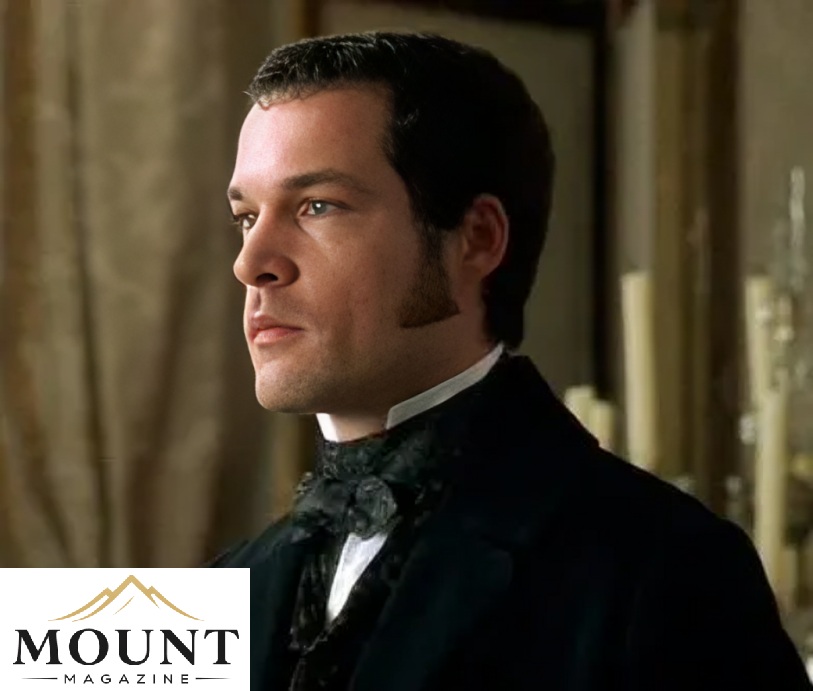
John Light’s screen debut came in 2001 with two productions that placed him, at the outset of his film and television career, in considerably more prominent company than most actors encounter in their first screen year. Steven Spielberg and Tom Hanks’ Band of Brothers — the HBO miniseries whose production values, cast, and historical scope set a standard for prestige television that the medium spent the following decade attempting to match — gave him his first significant screen credit. He played Lieutenant Colonel O. Dobie — a supporting role in a production whose ensemble cast included Ron Livingston, Damian Lewis, and a large number of subsequently prominent British and American actors.
In the same year, he appeared in Alan Rudolph’s Investigating Sex — a comedy-drama whose modest independent scale was, in career terms, less significant than the encounter it produced: it was on the set of Investigating Sex that John Light first met Neve Campbell.
The television role that gave him his first substantial British audience was Henry Lennox in the BBC’s North & South (2004) — Andrew Davies’s four-part adaptation of Elizabeth Gaskell’s 1855 novel, produced at a level of period drama quality that the BBC had developed into a reliable critical and commercial formula. Lennox — the London barrister who loves Margaret Hale but loses her to Richard Armitage’s John Thornton — is a role that requires the specific quality of dignified restraint in defeat, and Light’s performance was noted by critics who observed that the role’s apparent secondary status concealed significant dramatic complexity that he navigated with precision.
Dresden (2006) — the German television film dramatising the Allied bombing of Dresden in February 1945 — gave Light one of the most challenging assignments of his screen career: the lead role of British pilot Robert Newman, performed substantially in German. The willingness to commit to the linguistic requirement of the role — to learn sufficient German to carry a dramatic lead in a language not his own, for a production aimed at a German audience — reflects both the seriousness with which he approaches character preparation and the specific confidence that his LAMDA training in voice and language had produced.
Other significant screen credits include the Geoffrey, Duke of Brittany role in the 2003 television film of The Lion in Winter — the celebrated twelfth-century royal family drama, this version starring Patrick Stewart as Henry II and Glenn Close as Eleanor of Aquitaine; The Prophecy: Uprising and Forsaken (2005), in which he played Satan; Glenn Close’s Albert Nobbs (2011); and the National Geographic series Mars (2016), in which he played Paul Richardson — a production that blended documentary and drama in a near-future Mars colonisation narrative.
Father Brown: Becoming Hercule Flambeau

When Father Brown premiered on BBC One on January 14, 2013, John Light appeared in the tenth and final episode of the first series — The Blue Cross, G.K. Chesterton’s original Father Brown short story, the first in which Flambeau appeared. The casting was, in retrospect, exactly right: Light brought to the role the combination of continental elegance, physical assurance, and moral complexity that Chesterton’s character requires, and the chemistry with Mark Williams’s Father Brown — the specific dynamic of a criminal being persistently, compassionately, and immovably outmanoeuvred by a small, modest Catholic priest — was immediately evident.
Flambeau in the BBC series underwent the character’s established arc from criminal nemesis to reformed collaborator, assisting Father Brown with the specific skills that a career in sophisticated theft develops — social manipulation, disguise, an understanding of how the world’s security systems actually function — while maintaining the suggestion that the reformation is genuine rather than tactical. The character’s gradual transition from adversary to ally, played across seasons with the restraint that Light consistently applies to material that lesser actors might push toward sentimentality, became one of the show’s most popular recurring elements.
He has appeared in approximately one episode per season — a frequency that maintains the character’s significance without exhausting his dramatic potential, and that requires the production’s writing team to construct a storyline specifically worthy of Flambeau’s presence. In the ninth season, he appeared in two consecutive episodes — a departure from the standard pattern that reflected the specific narrative weight the producers wanted Flambeau’s storyline to carry that year. In the twelfth season, he reprised the role in The Cup of Calabria, placing Flambeau at the centre of a Vatican-connected mission whose international scope was typical of the larger canvas that Flambeau episodes tend to occupy relative to the show’s standard village mysteries.
Mark Williams’s tribute is the most quoted assessment of Light’s contribution to the series — “I love the Flambeau episodes, it feels like we are in a 1950s thriller and John Light plays him to the hilt” — but it captures something specific: that Flambeau episodes change the register of the show, elevating its visual and tonal ambition toward the classic crime thriller tradition, and that the actor who delivers them is doing something qualitatively different from the rest of the cast’s very considerable work.
Neve Campbell: The Shakespeare Proposal and the Malibu Marriage

John Light and Neve Campbell — the Canadian actress whose career spans The Craft (1996), the Scream franchise (1996–2022), Wild Things (1998), Party of Five (1994–2000), House of Cards (2013–2018), and The Lincoln Lawyer (2022–present) — met in 2001 on the set of Investigating Sex. Campbell was at that point coming out of her first marriage to Canadian actor Jeff Colt, which had ended in 1998 after three years.
Their relationship developed slowly — they are reported to have begun dating in 2005, four years after their initial meeting. The engagement came in December 2005, through a proposal that People magazine subsequently described with the specific detail that has made it one of the more discussed proposals in the minor celebrity biography canon: Light proposed by reciting Shakespeare. The choice was, for a LAMDA-trained classical actor whose professional identity was built on Shakespeare and the English dramatic canon, not an affectation but the most genuine expression available to him of the quality of his feeling.
They married on May 5, 2007, in a private ceremony in Malibu, California — attended by family and close friends, conducted away from the press, as low-key as two recognisable public figures can arrange on the Southern California coast. After the wedding, they settled in Islington, north London — the north London neighbourhood whose particular character, part artistic community and part conventional urban residential area, suited both of them. The marriage was, by all available accounts, conducted with the same privacy that both parties had maintained through the relationship’s development.
On June 30, 2010, Campbell filed for divorce in Los Angeles, citing irreconcilable differences. The proceedings were finalised in 2011. No public statements of attribution or grievance were made by either party. Campbell subsequently met actor JJ Feild, with whom she has a son, Caspian, born in 2012. She later married him. Light has not publicly confirmed any subsequent relationship.
Net Worth and the Economics of a Stage Career
| Income Source | Estimated Contribution |
|---|---|
| Theatre — RSC, National, Almeida, Kiln, West End (25+ years) | Modest per production; cumulative significant |
| Band of Brothers (2001, HBO) | Early screen fee |
| North & South (2004, BBC) | Mid-level BBC drama fee |
| Dresden (2006, German TV) | Lead role fee |
| Father Brown — Flambeau (2013–present, 14+ episodes) | ~£15,000–£30,000 per episode (BBC est.) |
| Mars (2016, NatGeo) | US cable drama fee |
| Around the World in 80 Days (2021) | International co-production fee |
| Showtrial (2024, BBC) | BBC drama fee |
| Estimated Total Net Worth (2026) | $3 million – $4 million |
The figure reflects a career built on consistent quality across three decades rather than on the blockbuster salaries that franchise acting or American network television produces. British theatre, even at the RSC and National Theatre level, pays modestly by American industry standards; the net worth is the compound result of sustained professional activity across multiple disciplines rather than a single large-scale payday.
Conclusion
John Light was born in Birmingham on September 30, 1973, the son of a headmaster, the first cousin twice removed of a poet, the brother of a youth theatre director. He trained at LAMDA, graduated in 1996, built a stage career that earned him two Ian Charleson nominations and a Laurence Olivier nomination, appeared in Band of Brothers and North & South, performed a lead role in German in Dresden, proposed to Neve Campbell by reciting Shakespeare, married her in Malibu, settled in Islington, divorced quietly, and has spent the decade since playing the most elegant recurring criminal in British television drama with a restraint and authority that Mark Williams describes as playing Flambeau to the hilt.
He does not maintain social media. He does not discuss his private life. The work is the statement — fifty-two years old, a career that spans Stratford to Malibu and back to the Cotswolds village set of Father Brown, built on craft rather than celebrity, sustained by the specific quality of presence that LAMDA-trained classical actors carry into every room they enter.
The man who proposed in Shakespeare has not, in anything he has done since, given you any reason to doubt the sincerity of the gesture.

