


Nigel Havers is, by the consistent verdict of the British public and the British entertainment industry across more than five decades, the most charming man on British television — a performer who has made an entire career out of a quality that looks effortless and is, in fact, the result of genuine intelligence, genuine warmth, and the specific kind of aristocratic ease that his upbringing in one of England’s most distinguished legal families gave him and that his own personality transformed into something entirely his own. He was BAFTA-nominated for Chariots of Fire. He worked with David Lean in A Passage to India and Steven Spielberg in Empire of the Sun. He was Dr. Tom Latimer in Don’t Wait Up for seven series and 39 episodes. He was Ralph Gideon in The Charmer, the role that consolidated his public reputation as a suave, magnificent cad. He was Lewis Archer in Coronation Street for a decade. He presented The Bidding Room on BBC One. And in March 2025, at the age of seventy-three, he played his own grandfather — the judge who sentenced the last woman hanged in Britain — in ITV’s A Cruel Love: The Ruth Ellis Story. He has been doing this for more than fifty years and he is still doing it at the same level of quality, charm, and complete professional commitment that he brought to every production before it.
Biography / Wiki Table
| Detail | Information |
|---|---|
| Full Name | Nigel Allan Havers |
| Date of Birth | November 6, 1951 |
| Age (2025) | 73 years old |
| Place of Birth | Edmonton, Middlesex (now Greater London), England |
| Raised In | Wimbledon, London |
| Nationality | British |
| Ethnicity | White British |
| Religion | Christian |
| Height | 6 ft 0 in (183 cm) |
| Eye Color | Blue |
| Hair Color | Dark Brown / Grey |
| Father | Sir Michael Havers, Baron Havers (1923–1992) — barrister; Conservative MP Wimbledon; Attorney General for England and Wales (1979–1987); Lord Chancellor (1987); defended Mick Jagger and Keith Richards in 1967 drug trial; chief prosecutor of Peter Sutcliffe / Yorkshire Ripper in 1981 |
| Mother | Carol Elizabeth Lay (died 1989) |
| Paternal Grandfather | Sir Cecil Havers (High Court judge; sentenced Ruth Ellis — the last woman hanged in Britain — in 1955) |
| Paternal Aunt | Dame Elizabeth Butler-Sloss (first woman elevated to Court of Appeal; first female head of Family Division of High Court) |
| Brother | Philip Havers (barrister; King’s Counsel; son also a barrister) |
| First Wife | Carolyn Cox (met 1970; moved in together 1974; married; divorced; one daughter) |
| Daughter | Kate Havers (TV producer and voice actress; born 1977) |
| Second Wife | Polly Williams (actress; daughter of actor Hugh Williams; sister of Simon Williams; mid-1980s relationship; married 1989; died June 24, 2004, ovarian cancer) |
| Third Wife | Georgiana Bronfman née Rita Webb (former wife of Edgar Bronfman Sr.; married June 8, 2007, New York City) |
| Godson | Jack Whitehall (comedian and actor) |
| Drama Training | Arts Educational Trust (Arts Ed), London; Oxford Playhouse Drama School |
| Professional Radio Debut | Mrs Dale’s Diary (BBC Radio) — as a child |
| First Film | Pope Joan (1972) |
| Breakthrough TV | Nicholas Nickleby (BBC, 1977) — watched by 18 million viewers |
| Career-Defining Film | Chariots of Fire (1981) — BAFTA nomination Best Supporting Actor |
| Notable Films | A Passage to India (1984), Empire of the Sun (1987), Farewell to the King (1989) |
| Notable TV | Don’t Wait Up, The Charmer, Dangerfield, Coronation Street (Lewis Archer), Downton Abbey, The Gentlemen, A Cruel Love: The Ruth Ellis Story |
| Autobiography | Playing with Fire (Headline Publishing Group, October 2006) |
| Presenting Work | The Bidding Room (BBC One); The Real Chariots of Fire (ITV documentary, 2012) |
| Current UK Tour | Talking B******s — solo theatrical tour, Spring and Autumn 2026 |
| Regret | Claims to regret not moving to Hollywood after Chariots of Fire |
| Notable Audition | Was one of only two actors permitted to audition for Captain Janeway in Star Trek: Voyager (the other being Gary Graham) |
| Award | BAFTA nomination — Best Actor in a Supporting Role — Chariots of Fire (1982) |
| Net Worth (est.) | Approximately £4 million |
| IMDb | nm0369814 |
The Family That Chose the Law: A Dynasty of Distinction
To understand Nigel Havers fully, it is necessary first to understand the family he came from — because the Havers family is one of those English legal dynasties whose accumulation of distinction across multiple generations is almost too neat to be true, and whose combined biography reads as a compressed history of the British legal establishment across the twentieth century.
His grandfather, Sir Cecil Havers, was a High Court judge of considerable standing — and the judge who, in 1955, presided over the trial of Ruth Ellis, the nightclub hostess who shot her lover David Blakely and was subsequently hanged at Holloway Prison on July 13, 1955, becoming the last woman to be executed in Britain. It was Sir Cecil who sentenced her. The case has been discussed, debated, and dramatised for seven decades since — most recently in the ITV series A Cruel Love: The Ruth Ellis Story, which aired in March 2025 and in which Nigel Havers played Sir Cecil Havers himself, his own grandfather, a piece of personal and familial casting that carries a historical weight unusual even by the standards of the most extraordinary casting decisions in British television.
His aunt, Dame Elizabeth Butler-Sloss, was the first woman to be elevated to the Court of Appeal and the first female head of the Family Division of the High Court — a figure of genuine legal history whose achievements, at a time when the highest levels of British legal practice were entirely closed to women, made her a trailblazer of real and lasting consequence.
His father, Sir Michael Havers — who became Baron Havers of St Edmundsbury — was a barrister and Conservative politician of exceptional distinction. He served as the Member of Parliament for Wimbledon, Attorney General for England and Wales from 1979 to 1987 under Margaret Thatcher, and briefly as Lord Chancellor in 1987 before ill health forced his resignation after only a few months. He is perhaps most widely remembered for two specific moments: the successful defence of Mick Jagger and Keith Richards on drug charges in 1967 — a trial that played out against the backdrop of the Rolling Stones’ cultural ascendancy and generated exactly the kind of collision between establishment legal culture and rock and roll rebellion that the 1960s specialised in producing — and his role as chief prosecutor of Peter Sutcliffe, the Yorkshire Ripper, in 1981. His father and Kenneth More — the actor — were best friends who had served together on the same ship during the Second World War. It was through this friendship that Nigel grew up knowing actors and understanding the entertainment world from the inside of one of its most distinguished personalities.
His brother Philip Havers followed the family vocation into the law, becoming a barrister and King’s Counsel of considerable standing, with his own son also entering the profession.
Nigel, the younger of two sons, chose the stage. The decision was not, by his own account, one that required conflict or drama — his father’s friendship with actors and his mother’s encouragement of the arts made it a natural enough choice for a family that prized intelligent professional life in whatever form it took. But the contrast between the legal dynasty he grew up in and the acting career he built remains one of the more charming biographical ironies in British entertainment history.
Early Life: Wimbledon, Peter O’Toole, and the Decision
Nigel Havers was born on November 6, 1951, in Edmonton, Middlesex — then a borough of Middlesex, now part of the London Borough of Enfield — and grew up in Wimbledon, in the comfortable, leafy south-west London suburb where his father’s legal career and Conservative political activities made the family a well-established local presence.
He has described seeing Peter O’Toole’s Hamlet as a transformative experience — the kind of theatrical revelation that changes the direction of a young person’s life by making it suddenly, entirely clear what they want to do with it. O’Toole’s Hamlet, with its combination of intellectual ferocity and physical magnetism, offered a vision of what acting at its greatest could be, and Nigel’s decision to pursue performance rather than law was confirmed in that encounter.
His first professional work came, remarkably, through BBC radio — as a child, he appeared in Mrs Dale’s Diary, the long-running BBC radio soap opera, cast because, as he has recalled with characteristic self-deprecation, he was the only child available with a Received Pronunciation accent and the casting director took the view that he would suffice.
He received a private education — the specific school has been identified in different sources variously, with the Arts Educational School in London confirmed as his primary drama training institution. He subsequently attended a drama school attached to the Oxford Playhouse — one of the most respected regional theatre training programmes in England — where he worked simultaneously in university productions, appearing always in revues and comedies rather than straight drama, which is entirely consistent with the quality of wit and lightness that would define his career. While at the Oxford Playhouse he appeared in a revue production of Twelfth Night at the Edinburgh Fringe Festival which transferred to London, where it was seen by an American director who took the production to the United States — giving Havers his first taste of international performance before he had appeared in a single professional film or television production.
He moved in with his girlfriend Carolyn Cox in 1974, ending the itinerant bachelor existence that had sustained his early career years, and began building the domestic stability alongside the professional foundation that the following decade would bring together into genuine sustained success.
The 1970s: BBC Drama, 18 Million Viewers, and a Career Taking Shape
Nigel Havers’s first professional film appearance came in Pope Joan (1972) — the historical drama directed by Michael Anderson about the legendary female pope — in a small supporting role. It was a modest beginning, consistent with where any performer is at the outset of a career whose later chapters would be considerably more distinguished.
His television career began to build in 1975 with an appearance in Crown Court — Granada Television’s long-running courtroom drama, in which he played the hapless heroin addict Patrick Mills, standing trial for a series of drug offences — and a guest role in Upstairs, Downstairs, the ITV period drama set in an Edwardian townhouse that attracted audiences of 15 to 20 million viewers per episode at its peak. The Upstairs, Downstairs appearance gave him his first exposure to high-profile British television and to the specific demands of period drama performance — the physical discipline of the period costume, the particular register of the Edwardian upper-class register, and the challenge of holding attention within an ensemble of established performers.
In 1977, he was cast in the lead role of Nicholas Nickleby — the BBC’s dramatisation of Charles Dickens’s novel — in a performance that was watched by eighteen million viewers on Sunday evenings and established him, overnight, as a leading actor in the first rank of British television drama. The Nicholas Nickleby credit was, by his own description, the moment the work started to flow in — the point at which the industry’s confidence in him was definitively established and the question of whether he could carry a major production was answered.
A Horseman Riding By (BBC, 1978) — the adaptation of R.F. Delderfield’s novel about a Edwardian country estate — consolidated the position that Nicholas Nickleby had established, giving him another sustained leading role in a major BBC drama serial and extending his audience across two consecutive years of significant national television visibility.
He also appeared in The Glittering Prizes (BBC, 1976) — Frederic Raphael’s acclaimed series about a group of Cambridge students navigating the post-war decades — further building the association with quality BBC drama that would sustain his career across the following years.
Chariots of Fire (1981): Lord Andrew Lindsay and the BAFTA Nomination
The film that changed Nigel Havers’s life and established his international profile was Chariots of Fire — Hugh Hudson’s 1981 British sports drama about the 1924 Paris Olympics, which won four Academy Awards including Best Picture and remains one of the most beloved and most culturally embedded British films ever made. He played Lord Andrew Lindsay — the Scottish aristocrat and Olympic hurdler who, in the film’s most famous scene, trains by placing champagne glasses on the hurdles — with a quality of aristocratic charm and physical grace that is entirely consistent with everything his upbringing and training had equipped him to bring to the role.
He has spoken, with characteristic candour, about his initial response to the casting. He wanted the main role — the Harold Abrahams part played by Ben Cross — and initially turned down Lord Andrew Lindsay on the grounds that the role seemed insufficiently central. He subsequently changed his mind. He has described this, with the self-deprecating wit that is one of his most endearing qualities, as an act of considerable arrogance that he was very glad circumstances eventually corrected.
The physical preparation was demanding. Former Olympic coach Tom McNab put the entire cast through an intensive athletic training programme, and on the first day reportedly told the assembled actors that as far as he was concerned all actors were ineffectual — a view that the cast, including Havers, worked hard and successfully to change. The training regime gave the film’s athletic sequences their genuine quality of physical authenticity, and gave Havers one of his most vivid professional experiences.
His performance earned him a BAFTA nomination for Best Actor in a Supporting Role — the most significant formal industry recognition of his career to that point, and the validation of a quality that the entire British industry had known about since Nicholas Nickleby but that the international visibility of Chariots of Fire now confirmed for a global audience.
He has since admitted that he regrets not moving to Hollywood in the immediate aftermath of the film’s success — the window of opportunity that four Academy Awards and a BAFTA nomination opened was real, and he is honest about having not walked fully through it at the moment it was available.
David Lean, Steven Spielberg, and the 1980s Film Career
The international credibility established by Chariots of Fire brought Nigel Havers into two of the most distinguished film productions of the decade that followed — working, in successive years, with two of the most celebrated directors in the history of cinema.
A Passage to India (1984) — David Lean’s final film, based on E.M. Forster’s novel about the relationship between the British ruling class and Indian society during the colonial era — cast Havers as Ronny Heaslop, the City Magistrate whose rigid adherence to the social codes of the Raj places him in conflict with the more open-minded Adela Quested. The film won two Academy Awards and received eleven nominations including Best Picture, and working with David Lean — whose previous films included Lawrence of Arabia, Doctor Zhivago, and Brief Encounter — placed Havers in a professional context of extraordinary distinction.
Empire of the Sun (1987) — Steven Spielberg’s adaptation of J.G. Ballard’s semi-autobiographical novel about a young English boy’s experience in a Japanese internment camp during the Second World War — cast him as Dr. Rawlins alongside John Malkovich and the young Christian Bale in one of Bale’s earliest and most celebrated performances. Working with Spielberg on a production of this scale and ambition was another landmark professional experience, and the film’s status as one of Spielberg’s most underrated and most emotionally powerful works has only grown in the years since its release.
Farewell to the King (1989) — John Milius’s adventure film set in Borneo during the Second World War — completed the decade’s film trilogy, giving him another international production alongside Nick Nolte and extending his experience across a remarkably varied range of serious cinematic work.
| Major Film Credits | Year | Director / Notes |
|---|---|---|
| Pope Joan | 1972 | Film debut — small role |
| Chariots of Fire | 1981 | Hugh Hudson; 4 Academy Awards incl. Best Picture; BAFTA nomination |
| A Passage to India | 1984 | David Lean; final film; 2 Oscars, 11 nominations |
| The Little Princess | 1986 | With Maureen Lipman |
| Empire of the Sun | 1987 | Steven Spielberg; Christian Bale; John Malkovich |
| Farewell to the King | 1989 | John Milius; Nick Nolte |
| Cry Freedom | 1987 | Richard Attenborough |
| The Burning Season | 1994 | Raul Julia — TV film |
| The Clandestine Marriage | 1999 | Nigel Hawthorne, Joan Collins |
| Penelope | 2006 | Christina Ricci, James McAvoy |
Don’t Wait Up (1983–1990): Seven Series and 39 Episodes
If Chariots of Fire was the film that established Nigel Havers’s international credentials, Don’t Wait Up was the British television series that made him a household name in the most thorough and most sustained sense — a show that ran for seven series and 39 episodes from 1983 to 1990, starring him as Dr. Tom Latimer, a young doctor navigating the comic complications of a life in which both his divorced parents are seeking his attention while he tries to manage his own professional and romantic life.
The show starred him alongside Tony Britton (playing his father, also a doctor) and Dinah Sheridan, and combined the warmth and comic timing of the best British sitcoms of its era with a quality of genuine character writing that gave all three leads something genuinely worth playing. Havers’s particular gift for making likeable, slightly fallible, inherently warm-hearted characters feel authentic and specific rather than generic was perfectly suited to the demands of Dr. Tom Latimer — a character whose combination of professional competence and personal confusion gave him exactly the kind of comic-dramatic range that his abilities were designed for.
The show ran through the decade that also produced Chariots of Fire, A Passage to India, and Empire of the Sun — meaning that across the 1980s Havers was, uniquely, a major film actor working at the very top of the international industry and simultaneously a beloved British television sitcom star. The combination gave him a breadth of audience and a depth of public affection that neither credential alone could have produced.
The Charmer (1987): The Role That Named Him
If Don’t Wait Up made Nigel Havers a household name through warmth and comic reliability, The Charmer — the six-part ITV drama series that aired in 1987 — gave him the role that named him in the national cultural imagination and established the quality of magnificent, slightly untrustworthy charm as his defining professional attribute.
Ralph Gideon — the 1930s confidence man at the centre of The Charmer — was a character of extraordinary complexity: charming enough to gain the trust and affection of everyone he encountered, ruthless enough to exploit that trust systematically, and ambiguous enough in his deeper motivations to generate genuine sympathy even from an audience that knew exactly what he was doing. Playing him required the combination of absolute charm, controlled menace, and psychological subtlety that not many actors could have delivered at the necessary pitch — and Havers delivered it completely.
The timing was noted. It was while he was appearing in The Charmer — playing the most seductive and morally unreliable character of his career — that his affair with Polly Williams became public knowledge. The collision between the character’s on-screen behaviour and his off-screen personal situation gave his public reputation exactly the kind of complicating texture that makes a performer interesting rather than simply admirable, and it was handled by the press — and by Havers himself, with characteristic wry acknowledgement — in the spirit of an irony too perfect to be entirely uncomfortable.
Polly Williams: The Great Love and the Terrible Loss
Nigel Havers began a relationship with Polly Williams — the actress, daughter of actor Hugh Williams, and sister of his friend Simon Williams — in the mid-1980s. Polly was an actress and director in her own right, a woman of considerable talent and warmth who made the relationship a genuine partnership of mutual support and shared professional understanding.
They married in 1989, after several years of the relationship developing through the considerable personal complexity that its beginning had involved. The marriage was, by every available account, deeply happy — a genuine love story that gave both of them what the years before it had lacked. Then, in the early 2000s, Polly was diagnosed with ovarian cancer.
Havers has spoken publicly about the period of Polly’s illness and death with a directness and emotional honesty that is rare for someone of his generation and background. He nursed her through her illness with complete commitment, staying entirely by her side across the two years of her decline, and was with her when she died on June 24, 2004, in London. She was 52 years old.
His autobiography, Playing with Fire — published in October 2006 by Headline Publishing Group — addresses the experience of Polly’s illness and death with the same candour and warmth that characterise the rest of the book’s account of his life and career. It is, by the account of those who have read it, as honest and as affecting as memoirs of this kind ever are.
Georgiana Bronfman: The Marriage That Brought Peace
In the period following Polly Williams’s death, Nigel Havers reconnected with Georgiana Bronfman — born Rita Webb in Essex, the former wife of Canadian-American billionaire Edgar Bronfman Sr. — who had known him socially and who offered genuine personal support during the years of his grief and readjustment.
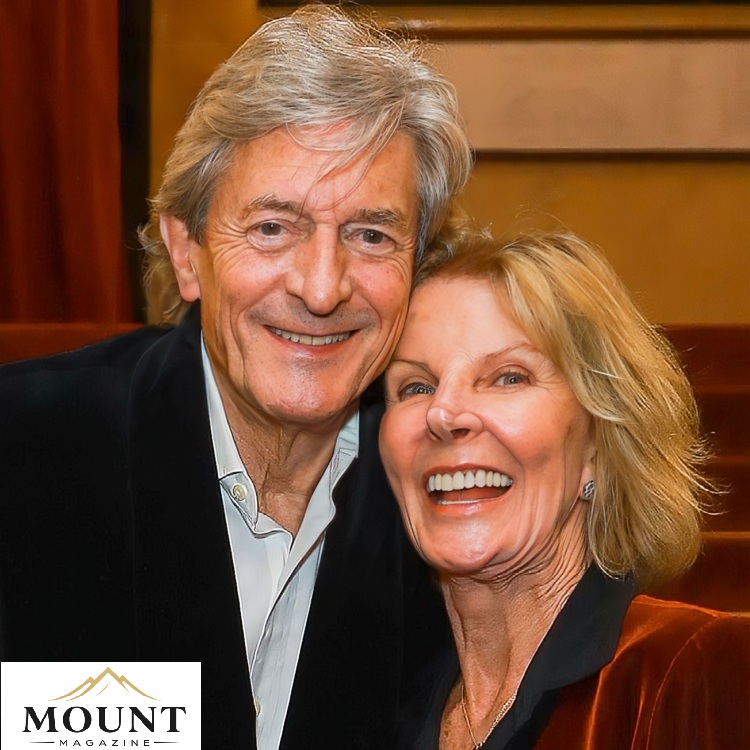
Their relationship developed naturally from that foundation of mutual respect and genuine friendship, and on June 8, 2007 — three years after Polly’s death — they married in New York City. He has described Georgiana — whom he calls “George”, as Edgar Bronfman had done — with unconcealed and entirely unperformed affection: incredible, he has called her; someone with whom he gets on extraordinarily well.
He told Piers Morgan on Life Stories that the dog negotiation was typical of their dynamic: Georgiana had been furious that he agreed to the interview without telling her, and the deal they struck was that he could do it in exchange for her being allowed to get a poodle. The poodle, named Charlie, arrived. He found himself smitten with the dog, which was, he acknowledged, exactly the outcome Georgiana had calculated.
They live primarily in Kensington, London, with a second home in Wiltshire — the kind of quiet, elegant West Country life that the decades of films and soap operas and BAFTA nominations and jungle reality shows and BBC auction programmes had been pointing toward, without anyone quite knowing it, all along.
Coronation Street: Lewis Archer and a Decade in Weatherfield
In December 2009, Nigel Havers joined the cast of Coronation Street — ITV’s legendary soap opera — as Lewis Archer, a charming male escort hired by the formidable Audrey Roberts (played by Sue Nicholls) as an accompaniment to a social function, who quickly becomes a recurring and increasingly complex presence in her life. The character of Lewis was, transparently, a fictional deployment of every quality that Havers had built his career on — the suave charm, the ambiguous morality, the capacity for genuine feeling beneath the polished surface — and the production’s decision to cast the most charming man in British television as a charming escort was one of the more perfectly calibrated casting decisions in the soap’s history.
Lewis Archer returned to Coronation Street across multiple stints between 2009 and 2019 — a decade of intermittent appearances that made him one of the show’s most discussed and most beloved recurring characters. His relationship with Audrey Roberts evolved through genuine warmth, deception, attempted reconciliation, and the specific dramatic complexity that the best long-running soap storylines produce when they are given room to breathe. Lewis Archer died in the show in 2019, bringing a decade of one of the soap’s most charming relationships to its conclusion.
The Gentlemen (2024) and A Cruel Love (2025): The Career Continues
In 2024, Nigel Havers appeared as Lord Whitecroft in The Gentlemen — Guy Ritchie’s Netflix crime comedy series that became one of the streaming platform’s most watched British productions of the year, starring Theo James, Kaya Scodelario, Giancarlo Esposito, and Ray Winstone in a story about a young aristocrat who inherits his father’s estate along with a criminal cannabis empire hidden beneath it. The show demonstrated Havers’s ability to operate in the most contemporary and commercially successful end of the market at the same level of quality and specific characterful presence that he has brought to every role across his career.
In March 2025, he appeared in A Cruel Love: The Ruth Ellis Story — the four-part ITV drama about the last woman to be hanged in Britain — playing Sir Cecil Havers, his own grandfather, the judge who sentenced Ruth Ellis in 1955. The casting was, by any measure, one of the most remarkable decisions in British television drama — an actor playing his own ancestor in a real historical case, bringing to the role not just professional craft but family memory and the specific weight of knowing that the man he was portraying was real, was his grandfather, and was at the centre of one of the most debated judicial decisions in British legal history.
I’m a Celebrity, The Bidding Room, and the Presenting Career
Nigel Havers has, alongside his acting career, built a parallel presence as a television presenter and personality that has extended his audience beyond the drama and comedy audience that knows him primarily as an actor.
In November 2010 he appeared as a contestant on the tenth series of I’m a Celebrity… Get Me Out of Here! — ITV’s jungle reality programme — and departed after one week, having objected vehemently to a challenge called Kangaroo Court in which losing contestants were subjected to electric shocks. His response — that the challenge was beneath his dignity and that he was not prepared to submit to it regardless of the entertainment value it might provide — was entirely in character, and his departure generated exactly the kind of warmly appreciative public response that his fans had come to expect from a man who knows precisely who he is and what he will and will not do.
His presenting work on The Bidding Room — BBC One’s auction-based entertainment series in which expert dealers compete to buy antiques and collectables from members of the public — gave him a sustained national presenting platform of genuine warmth and accessibility, and demonstrated the same quality of genuine interest in other people and other people’s stories that his best dramatic performances have always contained.
In 2026 he embarks on a nationwide solo theatrical tour, Talking B******s — billed as “an entertaining trot through his 50 years in showbusiness” — in which he will share stories, anecdotes, and observations from a career that has taken him from Mrs Dale’s Diary to The Gentlemen, from Edinburgh Fringe revues to the Coronation Street cobblestones, and from playing Lord Andrew Lindsay to playing Sir Cecil Havers.
The Career of Nigel Havers at Seventy-Three
Nigel Havers is seventy-three years old, and he is still one of the most watchable actors in British television. The quality that made him distinctive at twenty — the charm that looks like a gift and is actually a discipline, the warmth that feels effortless and is actually the result of genuine care for the people around him, the ability to make every character he plays feel inhabited rather than performed — is as present in The Gentlemen and A Cruel Love as it was in Chariots of Fire and Don’t Wait Up.
He grew up in a legal dynasty and chose the stage. He was BAFTA-nominated for one of British cinema’s most beloved films. He worked with David Lean and Steven Spielberg in the same decade. He was the nation’s most charming television doctor for seven series. He was the nation’s most charming fictional escort for a decade. He nursed his second wife through her death and found genuine peace in his third marriage. He plays his own grandfather in a period drama on ITV and goes on a solo national tour to share fifty years of stories with audiences who still, after all of it, simply want to be in the same room as him.
That is what fifty years of being the most charming man in British television looks like when the charm is real.
Complete Career Timeline
| Year | Milestone |
|---|---|
| November 6, 1951 | Born in Edmonton, Middlesex; raised in Wimbledon |
| ~Early 1960s | Professional radio debut in Mrs Dale’s Diary (BBC Radio) |
| ~Mid 1960s | Sees Peter O’Toole’s Hamlet; decides to become an actor |
| ~Late 1960s | Trains at Arts Educational Trust, London; Oxford Playhouse Drama School |
| ~Early 1970s | Edinburgh Fringe — Twelfth Night revue; transfers to London; American tour |
| 1972 | First film appearance — Pope Joan |
| 1974 | Moves in with Carolyn Cox |
| 1975 | Crown Court (Granada TV) — Patrick Mills; Upstairs, Downstairs guest role |
| 1976 | The Glittering Prizes (BBC) |
| 1977 | Nicholas Nickleby (BBC) — 18 million viewers; career breakthrough |
| 1977 | Daughter Kate Havers born (with Carolyn Cox) |
| 1978 | A Horseman Riding By (BBC) |
| 1979 | Divorces Carolyn Cox |
| 1981 | Chariots of Fire — Lord Andrew Lindsay; BAFTA nomination Best Supporting Actor |
| 1983–1990 | Don’t Wait Up (BBC) — Dr. Tom Latimer; 7 series, 39 episodes |
| 1984 | A Passage to India — David Lean; 2 Oscars, 11 nominations |
| 1985 | Begins relationship with Polly Williams (sister of Simon Williams) |
| 1987 | Empire of the Sun — Spielberg; Christian Bale |
| 1987 | The Charmer (ITV) — Ralph Gideon; defining television role |
| 1989 | Marries Polly Williams; Farewell to the King (John Milius) |
| 1989 | Mother Carol Elizabeth Lay dies |
| 1990 | Banned from driving for one year; fined £500 for drink driving |
| 1991 | Sleepers (BBC) |
| 1992 | Father Sir Michael Havers, Baron Havers, dies |
| 1995–1996 | Dangerfield (BBC) — Dr. Jonathan Paige; two series |
| 1999 | The Clandestine Marriage (Nigel Hawthorne, Joan Collins) |
| 2004 | Polly Williams dies of ovarian cancer (June 24) |
| October 2006 | Autobiography Playing with Fire published (Headline Publishing Group) |
| 2007 | The Sarah Jane Adventures (Doctor Who spin-off) |
| June 8, 2007 | Marries Georgiana Bronfman née Rita Webb in New York City |
| 2009 | Brothers & Sisters (US drama); joins Coronation Street as Lewis Archer (December 18) |
| November 2010 | I’m a Celebrity… Get Me Out of Here! — walks after one week |
| 2011 | Downton Abbey Christmas Special — Lord Hepworth |
| 2012 | The Real Chariots of Fire (ITV documentary) |
| 2012 | Returns to Coronation Street as Lewis Archer |
| 2013–2019 | Lewis Archer continues in Coronation Street (intermittent); character dies 2019 |
| 2014 | The Life of Rock with Brian Pern (BBC Four) |
| 2017–2018 | Benidorm (series 9 and 10) |
| 2020 | Finding Alice (ITV) — Roger; with Keeley Hawes and Joanna Lumley |
| 2024 | The Gentlemen (Netflix) — Lord Whitecroft; Guy Ritchie series |
| March 2025 | A Cruel Love: The Ruth Ellis Story (ITV) — plays Sir Cecil Havers, his own grandfather |
| Spring / Autumn 2026 | Talking B******s — UK solo theatrical tour |

