


Laurent Borel is a French actor and musician who built a screen career on his own terms — turning an extraordinary appearance shaped by a rare genetic condition into a defining professional asset. Known internationally for his role as the Crab Man in Yorgos Lanthimos’s Oscar-winning Poor Things (2023), Borel has steadily carved out a niche in French and international cinema as one of its most singular character actors.
Born in Orange in the south of France, Borel is a musician first and an actor second, having made his earliest artistic steps at the conservatoire at the age of 10. His journey from street performer to arthouse cinema fixture is one of quiet determination — a career built not in spite of who he is, but because of it.
Wiki Info Table
| Full Name | Laurent Borel |
| Born | 27 February 1973 |
| Birthplace | Orange, France |
| Nationality | French |
| Residence | Paris / Montreuil, France |
| Profession | Actor, Composer, Musician |
| Known For | Poor Things (2023), All the Gods in the Sky (2018), Frantz (2016), Monsieur Spade (2024) |
| Medical Condition | Craniosynostosis associated with Crouzon syndrome — a rare genetic condition affecting facial structure; partially sighted and partially deaf |
| Education | Conservatoire (from age 10); Licence in Musicology, Université de Montpellier III; CAPES in Music Education and Choral Singing |
| Instruments | Accordion, Drums, Keyboard/Synthesizer |
| Voice | Baritone |
| Languages | French (native) |
| Height | 177 cm |
| Career Highlights | Crab Man in Poor Things dir. Yorgos Lanthimos; Frantz dir. François Ozon; Astérix & Obélix: The Middle Kingdom dir. Guillaume Canet; Monsieur Spade (TV, AMC/Canal+); All the Gods in the Sky dir. Quarxx |
| Awards/Nominations | Poor Things — Venice Film Festival Golden Lion (ensemble cast, 2023); Indésirables (2013) — screened at the 41st César Awards ceremony |
| Documentary Subject | Ma gueule, ma gloire (2024), directed by Pascal Auffray |
| Net Worth | Not publicly disclosed |
| Spouse/Children | Not publicly disclosed |
Early Life and Education
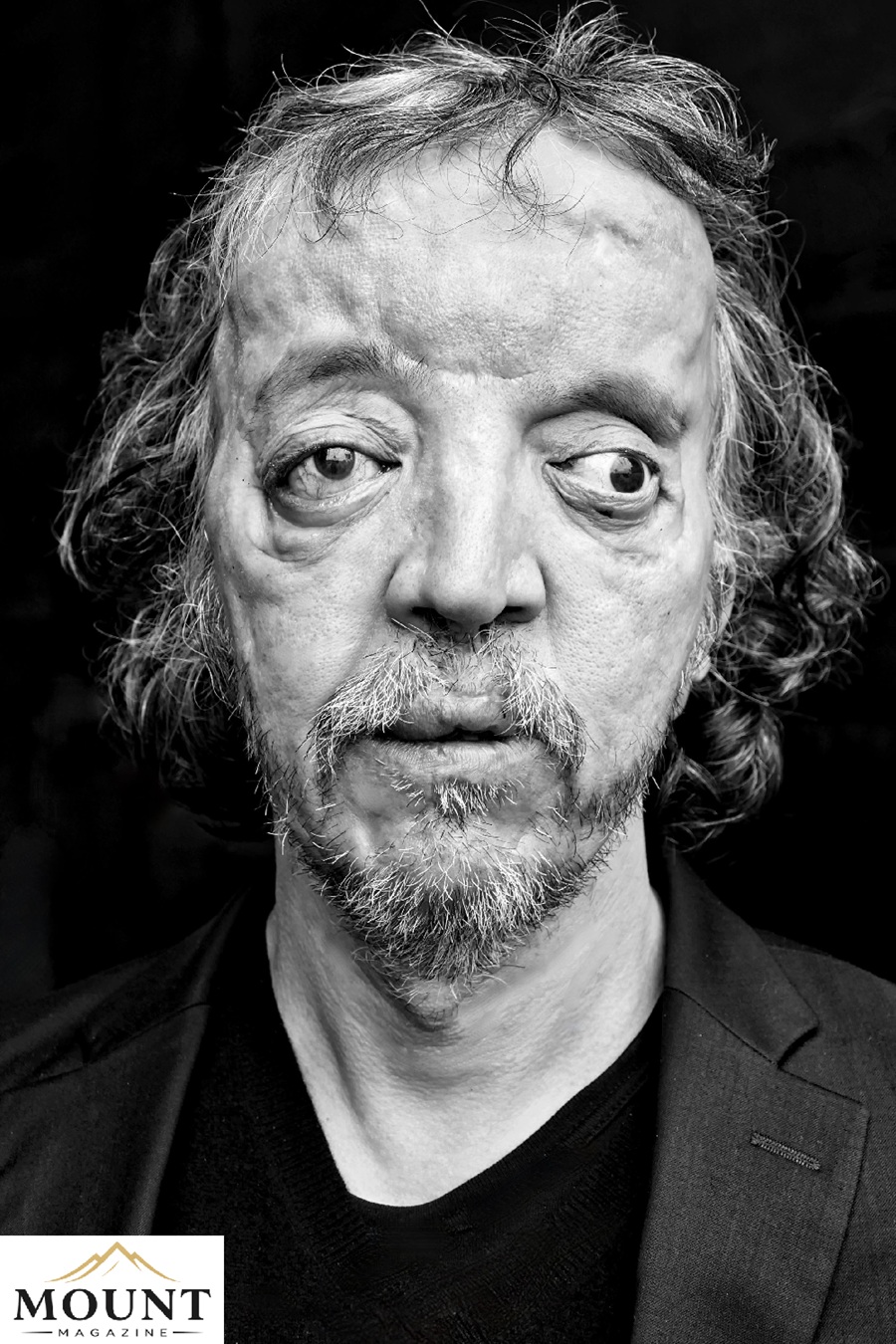
Borel was born in Orange in 1973, growing up in the south of France. From a young age, he was diagnosed with craniosynostosis associated with Crouzon syndrome — two conditions that distort his facial features and have caused him considerable physical and psychological suffering over his lifetime.
The condition required between 25 and 30 surgical operations over the course of his life, and has progressively affected his vision, leaving him partially sighted. He also has partial hearing loss. These medical realities shaped his childhood and continue to evolve — yet Borel has consistently refused to let them define his limits.
He took his first steps at the conservatoire at age 10, later earning a degree in musicology from the Université de Montpellier III, and subsequently a CAPES qualification in music education and choral singing. Before screens came calling, he was a stage performer and street musician, playing his accordion in hospitals and care homes, bringing music to patients and residents.
Theatre and Musical Roots
Borel’s artistic foundation is firmly theatrical. He has written, directed, and performed in his own productions, as well as appearing in Shakespeare adaptations including Richard III, A Midsummer Night’s Dream, and King Lear, and comedies such as Le Père Noël est une ordure.
His specialisations as a musical and theatre actor, combined with his multi-instrumental skills — accordion, drums, keyboard — have fed directly into his screen work. He has also composed music for stage and screen productions. The theatrical world gave him both a craft and a community long before the film industry noticed him.
Film Career
Borel’s first screen appearances came in 2014, when he appeared in three short films — Toujours en contact, Mes petits cafards et moi, and Ceci n’est pas une scène — for which he also composed the scores, often performing on accordion.
His feature debut came with Philippe Barassat’s Indésirables (2013/2015), a film addressing the sexuality of people with disabilities, in which Borel performed two musical pieces on camera. The film received critical praise and toured international festivals, including a showing connected to the 41st César Awards — a meaningful early validation.
François Ozon’s Frantz (2016) brought Borel to a wider audience, one of his best-known credits. Then came Quarxx’s All the Gods in the Sky (2018), a dark, genre-bending French production that cemented his reputation in arthouse circles.
The international breakthrough arrived with Yorgos Lanthimos’s Poor Things (2023). Borel played the Crab Man in a film that won the Golden Lion at Venice and went on to claim four Academy Awards including Best Picture. The role placed him alongside Emma Stone, Mark Ruffalo, and Willem Dafoe in one of the most celebrated films of the decade. The film’s official trailer is available to watch at His television profile also grew around this time. He appeared as Claude in Monsieur Spade (2024), the AMC/Canal+ miniseries directed by Scott Frank — a high-profile international production that extended his reach to English-language audiences.
More recent credits include Que Notre Joie Demeure (2024) and Renaître (2025), indicating a career that has continued to build steadily into the mid-2020s.
Identity, Disability, and Public Persona
What makes Borel’s story genuinely compelling is the way he has navigated the intersection of disability and visibility in an industry not known for either. He describes himself as a comédien à gueule — an actor cast for his face — noting plainly that directors choose him for his appearance. It is an honest, unsentimental framing.
Some roles have distressed him, he has said, because they reduced him entirely to his disability. Others have encouraged him. “I went from being a face to being an actor,” he has noted, referring proudly to his work with Guillaume Canet on Astérix & Obélix: The Middle Kingdom.
The tension he articulates — between being seen for who he is versus being seen only for how he looks — is one he navigates with unusual clarity. His disability card, he has pointed out with dry wit, reads “partially sighted” — not “ugly” or “asymmetrical.” The social dimension of his condition — the way others react to his face — is the aspect he pushes back against most forcefully.
Pascal Auffray, a filmmaker and longtime friend who has known Borel since the late 1980s, spent nearly a decade documenting his journey, resulting in the documentary Ma gueule, ma gloire (2024). The film is a frank portrait of an artist navigating art, illness, independence, and identity.
Filmography Overview
| Year | Title | Role | Director |
|---|---|---|---|
| 2013 | My Friend Victoria | — | Jean-Paul Civeyrac |
| 2013 | Indésirables | Musician | Philippe Barassat |
| 2016 | Frantz | Wounded Soldier | François Ozon |
| 2018 | All the Gods in the Sky | Patient 2 | Quarxx |
| 2023 | Poor Things | Crab Man | Yorgos Lanthimos |
| 2023 | Astérix & Obélix: The Middle Kingdom | — | Guillaume Canet |
| 2024 | Monsieur Spade (TV) | Claude | Scott Frank |
| 2024 | Que Notre Joie Demeure | Le SDF | Cheyenne Carron |
| 2025 | Renaître | — | Remi Lange |
Conclusion
Laurent Borel represents something rare in contemporary cinema — an actor who arrived late, worked from the margins, and reached international screens entirely on his own terms. His appearance in Poor Things was not a breakthrough so much as a confirmation: proof that a decades-long commitment to craft eventually finds its audience. He remains, at his core, a musician who acts — and an artist who has made being seen a kind of art in itself.
FAQs
What is Laurent Borel best known for? He is best known internationally for playing the Crab Man in Yorgos Lanthimos’s Poor Things (2023), which won the Golden Lion at Venice and four Academy Awards.
What medical condition does Laurent Borel have? He has craniosynostosis associated with Crouzon syndrome, a rare genetic condition affecting facial structure, that has left him partially sighted and partially deaf, requiring dozens of surgeries throughout his life.
Where is Laurent Borel from? He was born in Orange, in the south of France, and is based in the Paris area.
Is Laurent Borel a musician as well as an actor? Yes — music came first. He studied at the conservatoire from age 10, holds a musicology degree, and plays accordion, drums, and keyboard. He has also composed scores for several films.
What was the documentary Ma gueule, ma gloire about? A 2024 documentary by Pascal Auffray following Borel’s life and career over nearly a decade, exploring how he navigates disability, identity, and his work as an artist.
Has Laurent Borel won any awards? He has not won individual awards, though he was part of the ensemble cast of Poor Things, which won the Golden Lion at the 2023 Venice Film Festival.

