


Who Is Omar Sy
Omar Sy is a French actor, producer, and writer born on January 20, 1978 in Trappes, a working-class suburb southwest of Paris, to immigrant parents from West Africa. He is the first Black actor to win the César Award for Best Actor — France’s most prestigious film prize — awarded for his performance in The Intouchables in 2012. That film, which grossed over $426 million worldwide, remains one of the highest-grossing French-language films ever made. He has since built a career that spans French cinema, Hollywood blockbusters, and global Netflix stardom, becoming the most internationally recognisable French actor of his generation.
His trajectory — from a HLM (social housing project) in Trappes to the lead role in the most-watched non-English series in Netflix history — is a story that France has simultaneously celebrated and struggled to fully reckon with. In a film industry that historically offered limited space for non-white leads, Omar Sy did not simply break through; he broke through so decisively that the industry’s assumptions about who a French star could be had to be revised entirely around him.
| Detail | Information |
|---|---|
| Full Name | Omar Sy |
| Born | January 20, 1978, Trappes, Yvelines, Île-de-France, France |
| Nationality | French |
| Ethnicity | Fulani (Senegalese and Mauritanian descent) |
| Occupation | Actor, producer, writer |
| Years Active | 1996–present |
| Notable Work | The Intouchables (2011), X-Men: Days of Future Past (2014), Jurassic World (2015), Lupin (2021–present) |
| Awards | César Award for Best Actor (The Intouchables, 2012); Critics’ Choice Award; Golden Globe nomination |
| Production Company | Korokoro |
| Spouse | Hélène Sy (married July 5, 2007) |
| Children | Five: Selly, Tidiane, Sabah, Alhadji, Amani-Nour |
| Residence | Los Angeles, California, USA (since 2012) |
Trappes, the Banlieue, and Two Frances
Sy was born the fourth of eight children to Demba Sy, a Senegalese factory worker who had emigrated from the city of Bakel to France in 1962, and Diaratou Sy, a Mauritanian house cleaner. The family is of Fulani origin — a West African ethnic group spread across Senegal, Mauritania, Guinea, and the Sahel — and Sy grew up speaking both French in school and Pulaar, his parents’ native tongue, at home. Every other summer, the family travelled to Senegal, keeping connections to a world that existed alongside but entirely separately from the Île-de-France suburbs.
Growing up in Trappes, Sy became friends with Jamel Debbouze, who would become one of France’s most famous stand-up comedians, and professional footballer Nicolas Anelka. It was a neighbourhood that produced talent without offering it straightforward pathways. Sy has described the experience in terms of two Frances existing side by side — one he grew up inside, another he only discovered when he began working. The doors between them, he has said, were rarely open.
He left school in 1996 and went straight to work rather than university, driven by an urgent practical need to earn and a specific creative instinct that formal education was not where he would find it. His first job was at Radio Nova, a Paris station known for world music and non-mainstream programming, where he worked as a broadcaster and where he encountered the person who would define the first chapter of his career.
Omar and Fred: The Comedy Years on Canal+
At Radio Nova, Sy met Fred Testot, a comedian from Montluçon, and the two formed a partnership that would run for more than a decade. Their chemistry was immediate — Sy’s physical presence and warmth complementing Testot’s more restrained, precise comic delivery — and they began performing sketch comedy together on television almost immediately. Before the partnership solidified, Sy also worked with Jamel Debbouze on the Canal+ show Le Cinéma de Jamel and created his own television show called Le Visiophon.
The Omar and Fred partnership reached its widest audience through Service après-vente des émissions (SAV des émissions), a Canal+ sketch comedy show that ran from 2005 to 2012. The show’s premise — a customer service department for television programmes, satirising the content of other shows — gave the duo a flexible format that could accommodate almost any target. It became enormously popular in France and established both performers as household names. Sy and Testot also performed live stage shows together and released comedy DVDs throughout the late 2000s.
By the time the partnership wound down around 2011–2012, Sy had already received his first significant film offers. The comedy career had served its purpose: it had given him a national audience, an instinct for timing and audience response, and a confidence in his own charisma that translated directly to screen performance.
The Intouchables: A Film That Changed Everything
The Intouchables (2011), directed by Olivier Nakache and Éric Toledano, cast Sy as Driss, a young man from the Paris banlieues who answers an advertisement to become the caregiver for Philippe (François Cluzet), a wealthy quadriplegic aristocrat. The film’s central relationship — the contrast between Driss’s irreverence and Philippe’s world of cultural refinement — was built directly around the chemistry between its two leads, and Sy’s performance was the engine that made it work. His physical ease, comic instinct, and genuine emotional warmth gave a film that could have been schematic something much more complicated and alive.
The film’s commercial performance was extraordinary. It topped the French box office for eleven consecutive weeks and eventually became the second highest-grossing French film of all time, with worldwide receipts of over $426 million. It opened at number one in fifteen countries and played in markets — Germany, Japan, South Korea, Brazil — where French-language films rarely registered at that scale. At the 37th César Awards in 2012, Sy won Best Actor, becoming the first Black recipient in that category’s history. The award was not simply a personal milestone but a public marker of something the French film industry had been slow to acknowledge: that the country’s on-screen representation had not reflected the diversity of the country itself.
The film generated critical debate alongside its commercial success. Some commentators argued that the cross-class, cross-racial friendship at its centre was presented too comfortably — that it glossed over structural inequalities in favour of individual warmth. Sy has engaged with this criticism carefully, acknowledging the genuine tension while defending the film’s emotional honesty. The conversation the film provoked was, in some respects, as significant as the film itself.
Key Films at a Glance
| Film | Year | Role | Director |
|---|---|---|---|
| The Intouchables | 2011 | Driss | Nakache / Toledano |
| Samba | 2014 | Samba | Nakache / Toledano |
| X-Men: Days of Future Past | 2014 | Bishop | Bryan Singer |
| Jurassic World | 2015 | Barry Sembène | Colin Trevorrow |
| Chocolat | 2016 | Rafael Padilla | Roschdy Zem |
| Two Is a Family | 2016 | Samuel | Hugo Gélin |
| Inferno | 2016 | Christoph Brüder | Ron Howard |
| Tirailleurs / Father & Soldier | 2022 | Bakary Diallo | Mathieu Vadepied |
| Shadow Force | 2025 | Issac Sarr | — |
| French Lover | 2025 | Abel Camara | Nina Rives |
Hollywood and the Blockbuster Years
The international profile generated by The Intouchables opened Hollywood to Sy in a way that had no real precedent for a French actor of his background. His first major American role was Bishop in Bryan Singer’s X-Men: Days of Future Past (2014) — a mutant whose power involves the absorption and redirection of energy, and whose role in the film’s time-travel narrative gave Sy a contained but visually striking showcase. The casting placed him in a franchise whose ensemble structure accommodated new faces, and his physical presence made the role work without requiring more screen time than the story could support.
Jurassic World (2015) followed, directed by Colin Trevorrow, in which Sy played Barry Sembène, a dinosaur trainer working alongside the film’s antagonist raptor handler Owen Grady (Chris Pratt). The film grossed $1.67 billion worldwide — one of the highest-grossing films in cinema history at the time of its release — and gave Sy his largest global platform to that point. He returned to the franchise for Jurassic World Dominion (2022), reuniting with Trevorrow and a cast that included Bryce Dallas Howard, Chris Pratt, Laura Dern, Jeff Goldblum, and Sam Neill.
Between the two Jurassic films, his Hollywood work included a supporting role in Ron Howard’s adaptation of Dan Brown’s Inferno (2016) opposite Tom Hanks, and a voice performance in Transformers: The Last Knight (2017). These were not career-defining roles, but they maintained his presence in American studio cinema while his more personal work continued in France.
French Cinema: Chocolat, Tirailleurs, and the Work Between the Blockbusters
The French films Sy made alongside his Hollywood career represent the more substantially personal strand of his output. Samba (2014), again directed by Nakache and Toledano, cast him as an undocumented Senegalese immigrant navigating the threat of deportation in Paris while forming a relationship with a volunteer lawyer played by Charlotte Gainsbourg. The film earned over €30 million at the French box office and demonstrated that the chemistry of the Intouchables directing partnership could operate in more politically engaged territory.
Chocolat (2016), directed by Roschdy Zem, gave Sy perhaps his most historically significant French role: Rafael Padilla, the real-life first Black circus clown in 19th-century France, whose partnership with the white performer Footit made them the country’s most popular double act of the 1890s before racism and personal dissolution ended both the partnership and Padilla’s career. The film earned Sy a César Award nomination for Best Actor — his second — and represented the kind of biographical grounding in history that his more commercial work rarely required of him.
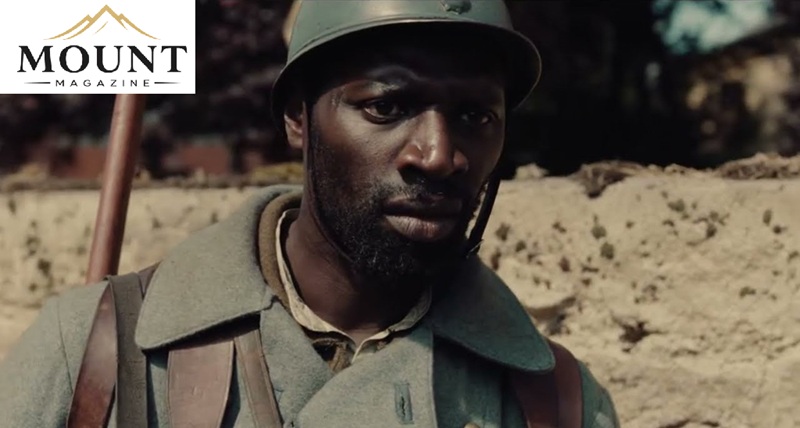
Tirailleurs (titled Father & Soldier in English, 2022), directed by Mathieu Vadepied and co-produced by Sy, went further still. The film follows a West African father who enlists in the French colonial infantry during World War One specifically to remain close to his conscripted teenage son. It opened the Un Certain Regard competition at Cannes, the first time a film produced by Sy had competed at the festival. It was also a film whose subject — the sacrifice of African soldiers for the French empire, largely written out of official French war memory — carried a political charge that Sy chose to carry publicly.
Lupin: Becoming a Global Phenomenon
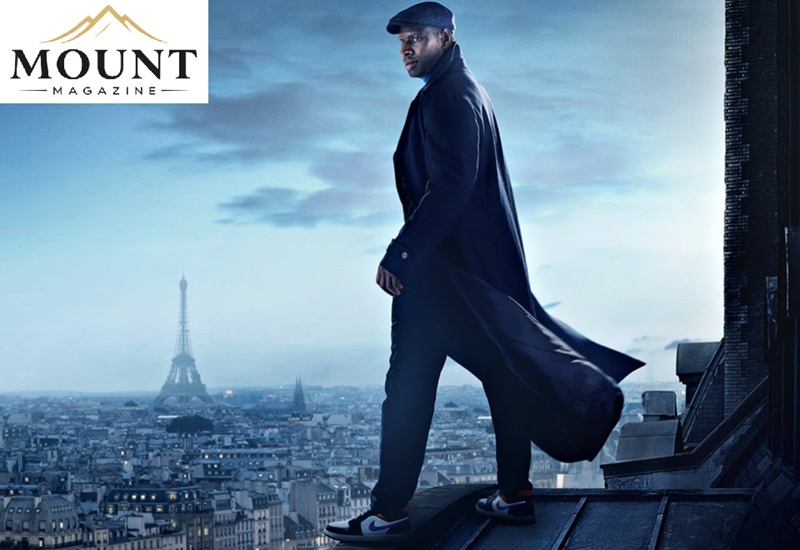
Lupin, the Netflix series that premiered in January 2021, transformed Sy’s international profile in a way that even The Intouchables had not. The show cast him as Assane Diop, a master thief and escape artist whose methods are inspired by the fictional gentleman burglar Arsène Lupin, the classic character created by Maurice Leblanc in 1905. Assane’s motivation is personal: his father, a Senegalese immigrant, was falsely accused of theft by the wealthy Pellegrini family and died in prison; Assane spends his adult life dismantling the Pellegrinis using Lupin’s techniques of disguise, misdirection, and audacity.
The show’s first part was watched by 76 million households within its first month — the most-watched non-English series in Netflix history at the time of release and the first French-language show to reach number one in multiple territories including the United States. Parts 1 and 2 occupy the third and sixth places respectively in Netflix’s all-time non-English viewing records. Part 3, released in October 2023, reached number two in the United States and accumulated 50 million completed viewings by January 2024.
Omar Sy serves not only as the series’ lead actor but as artistic producer and showrunner alongside director Louis Leterrier, giving him creative investment in the show’s direction that shapes its storytelling. Part 4, announced as an eight-episode final season, began filming in May 2025 with a confirmed Netflix release in fall 2026. On set photographs from August 2025 showed Sy riding a horse through Paris streets in Assane’s iconic long trench coat — the visual shorthand for a character that has become one of streaming television’s defining figures.
Korokoro, Netflix, and the Production Chapter
In 2021, Sy signed a multi-year first-look film deal with Netflix through his Paris and Los Angeles-based production company Korokoro — the first such deal Netflix had struck with a French filmmaker. The partnership positions Sy as both lead actor and executive producer across a slate of original projects, extending his relationship with the platform well beyond the Lupin franchise. The deal reflects a broader shift in his ambitions: from actor-for-hire to creative architect.
Under Korokoro’s banner, Sy co-produced Tirailleurs and several other French productions, and the company has expanded its output with recent titles including Une si longue lettre (2025), an adaptation of the Senegalese literary classic by Mariama Bâ, and Out of Control (2024). Sy also starred in French Lover (2025), a Netflix romantic comedy directed by Nina Rives — his first film in the genre since the Omar and Fred years — playing a celebrity who falls for his neighbour. It debuted on Netflix in September 2025. He is also in production on Mercenary: An Extraction Series, a Netflix spin-off to the Chris Hemsworth-led Extraction franchise, which will extend his action credentials into a major existing IP.
Personal Life and the Move to Los Angeles
Sy met Hélène at a young age — they had been together for ten years before marrying on July 5, 2007, in Tremblay-sur-Mauldre. They have five children: three daughters named Selly, Sabah, and Amani-Nour, and two sons named Tidiane and Alhadji. The family moved from their home in Montfort-l’Amaury, in the Île-de-France region, to Los Angeles in 2012, in part to position Sy for the American career that was then beginning to open up. He has spoken about learning English upon arrival by working daily with a language tutor and watching reality television — specifically Keeping Up with the Kardashians — as a tool for absorbing conversational American English.
Hélène Sy is an active figure in her own right: she runs CéKeDuBonheur, a nonprofit organisation supporting children in hospital wards across France, and Siyah Organics, a Senegalese-American organic food supplements company. Sy is Muslim and a supporter of Olympique de Marseille. In October 2023, he was among the signatories of an Artists4Ceasefire open letter during the Israeli bombardment of Gaza — one of his most direct public political interventions.
Within France, he has been named one of the most admired public figures in the country in annual IFOP polling on multiple occasions, a recognition that transcends the usual boundaries of celebrity. He is Alassane Diong’s uncle — Diong is himself a working actor, a family thread that extends the Sy name into a second generation of French screen performance.
An Actor Who Rewrote the Terms
The significance of Omar Sy’s career is not simply that a man from Trappes became a global film star — though that fact is, in itself, remarkable. It is that his success made a particular kind of argument impossible to ignore: that French cinema had been leaving enormous talent on the table by restricting the definition of a French lead. He did not make that argument through interviews or protests but through the cumulative evidence of performances, box office figures, and streaming records that the industry could not reframe or dismiss. The doors he described as closed in his youth have not swung open universally; the structural inequalities he has spoken about with care and precision persist. But the landscape on which those doors sit has shifted, and that shift has his name on it.

